

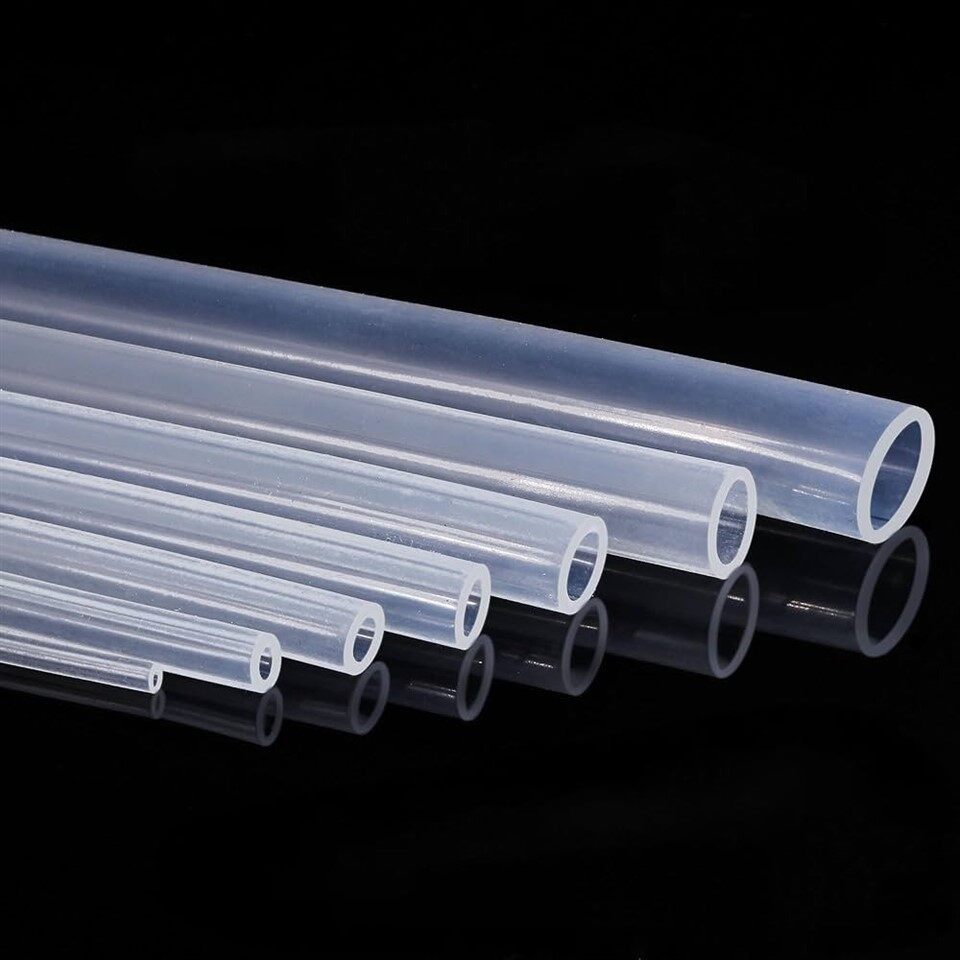
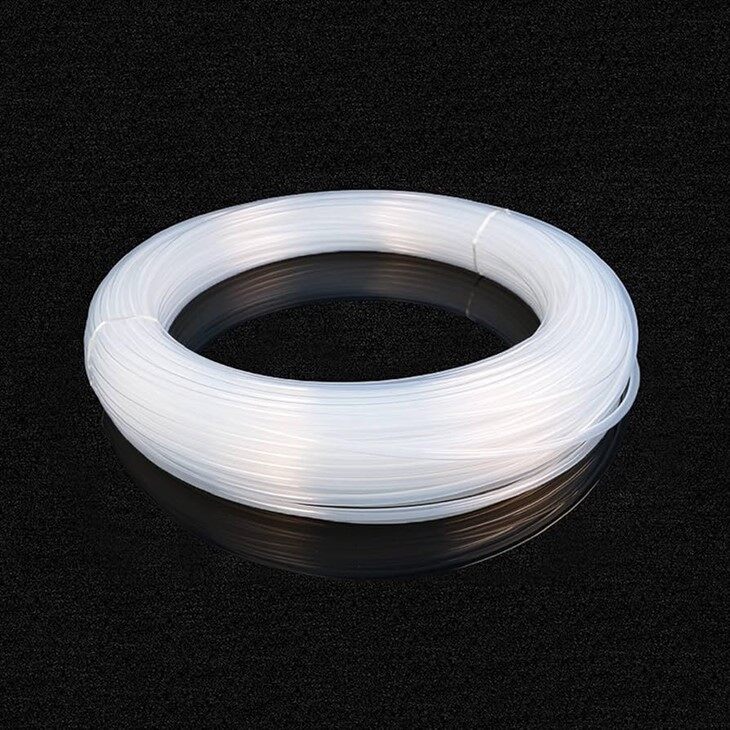
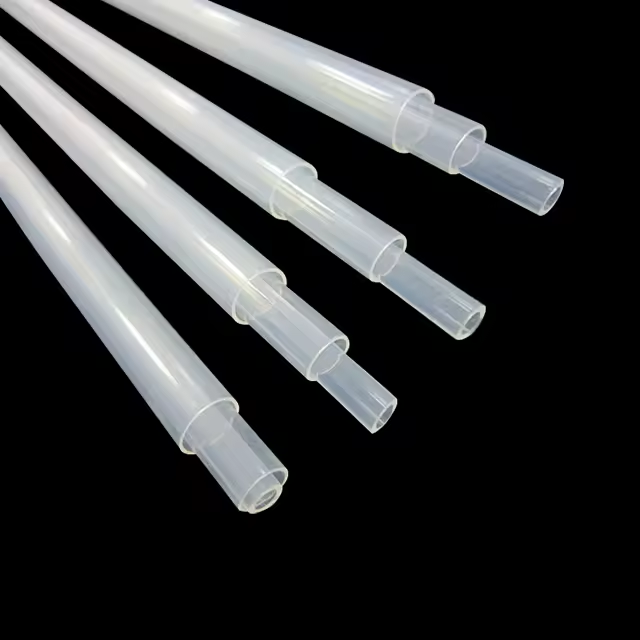
Chemical FEP Fluoropolymer Tubing
Chemical FEP (Fluorinated Ethylene Propylene) tubing is a highly versatile, transparent fluoropolymer known for exceptional chemical inertness, broad temperature range, and non-stick properties, making it ideal for transferring aggressive chemicals, solvents, and pure fluids in demanding labs, pharma, and food/beverage industries where resistance to corrosion, contamination, and clarity for visual flow inspection are crucial.
Chemical FEP (Fluorinated Ethylene Propylene) tubing is a highly transparent, flexible, and chemically inert, fluoropolymer that offers exceptional resistance to a wide range of industrial chemicals, solvents, and corrosive materials. It is suitable for temperatures ranging from -328°F to 392°F (-200°C to 200°C).making it ideal for laboratory, chemical processing, and medical applications. FEP is commonly used for fluid, medical sample, and viscous material transfer due to its non-stick, easily sterilized, and transparent nature.

Key Features and Benefits
Chemical Inertness
Withstands nearly all industrial chemicals, with exceptions including fluorine, molten alkali metals, and sodium hydroxide.
Superior Clarity
Highly transparent, allowing for easy visual inspection of flow and fluid level.
Temperature Range
Operates effectively in extreme environments, from -328°F to 392°F.
Non-Stick Surface
Excellent for transporting sticky or viscous materials, preventing buildup.
Flexibility
More flexible than PTFE, allowing for easier installation and handling.
Safety Compliance
Meets FDA standards for food-grade and medical applications.
Common Applications
Chemical Processing
Handling corrosive fluids and laboratory analysis.
01
Medical & Laboratory
Used in medical sample transport, diagnostics, and sterile fluid handling.
02
Industrial/Food Processing
Transfer of materials, including food,, for which a non-stick, non-contaminating surface is required.
03
Environmental Monitoring
Sampling tubes for water or gas analysis.
04
Electrical Insulation
Exceptional electrical insulation properties, suitable for cable shielding.
05

Specifications and Availability
Sizes
Available in a wide range of inner diameters (IDs) and outer diameters (ODs), including very small, precision sizes (e.g., 1/16" OD with 0.005" ID).
Forms
Offered as straight tubing, coiled/retractable, or in specialized, flexible configurations.
Customization
Can be flanged or processed for specialized equipment.
For high-purity requirements, FEP tubing is a trusted, versatile choice, often used in semiconductor and pharmaceutical manufacturing.
FEP Tube VS PTFE Tube
FEP (Fluorinated Ethylene Propylene) tube and PTFE (Polytetrafluoroethylene) tube are both high-performance fluoropolymer tubes with excellent chemical resistance, but they differ primarily in transparency, flexibility, and temperature resistance. FEP is clear, more flexible, and easier to process (melt-processable), while PTFE is more opaque, stiffer, and withstands higher temperatures (260°C vs 200°C).
Key Differences
Transparency
FEP is highly transparent (optically clear), making it ideal for visual monitoring of fluids. PTFE is typically milky white and translucent to opaque.
Temperature Range
PTFE has a higher maximum service temperature, generally up to 260°C(500°F),whereas FEP is rated up to 200°C(392°F).
Flexibility & Processing
FEP is more flexible and easier to handle in complex routing. FEP is melt-processable, allowing it to be welded, heat-sealed, and formed into complex shapes. PTFE is usually extruded as a paste and cannot be easily melted.
Friction
Both are excellent, but PTFE has a slightly lower coefficient of friction (0.04-0.07) compared to FEP (0.05-0.09).
Applications
FEP
Suitable for laboratory, medical, and analytical applications requiring visibility.
PTFE
Ideal for high-heat, industrial, and electrical insulation applications.
Physical Properties
|
Name |
PTFE |
FEP |
PFA |
|
Hardness Shore D |
50-65 |
55-60 |
55-60 |
|
Tensile Strength,psi |
2000-3000 |
4000 |
4200 |
|
Elongation at Break % |
200-450 |
250-330 |
400 |
|
Brittle Temperature,°F |
<450 |
<450 |
<450 |
|
Max.Continuous Operationg Temp.°F |
500 |
400 |
500 |


Payment&Shipping
|
Packing |
Carton / Pallet / Wooden Box |
|
Shipping method |
By express, By air, By Sea |
|
FOB Port |
Shenzhen |
|
Production time |
Depends on your qty(3~15 days) |
| OEM/ODM | Available |
| Payment | TT/Ali pay/Ali Assurance |
FAQ
FFP Fluoropolymer Tubing --Metric Sizes
|
ID |
OD |
Wall thickness |
|
(MM) |
(MM) |
(MM) |
|
2 |
3 |
0.5 |
|
2 |
4 |
1 |
|
4 |
6 |
1 |
|
6 |
8 |
1 |
|
8 |
10 |
1 |
|
10 |
12 |
1 |
|
12 |
14 |
1 |
|
14 |
16 |
1 |
|
16 |
18 |
1 |
|
18 |
20 |
1 |


