

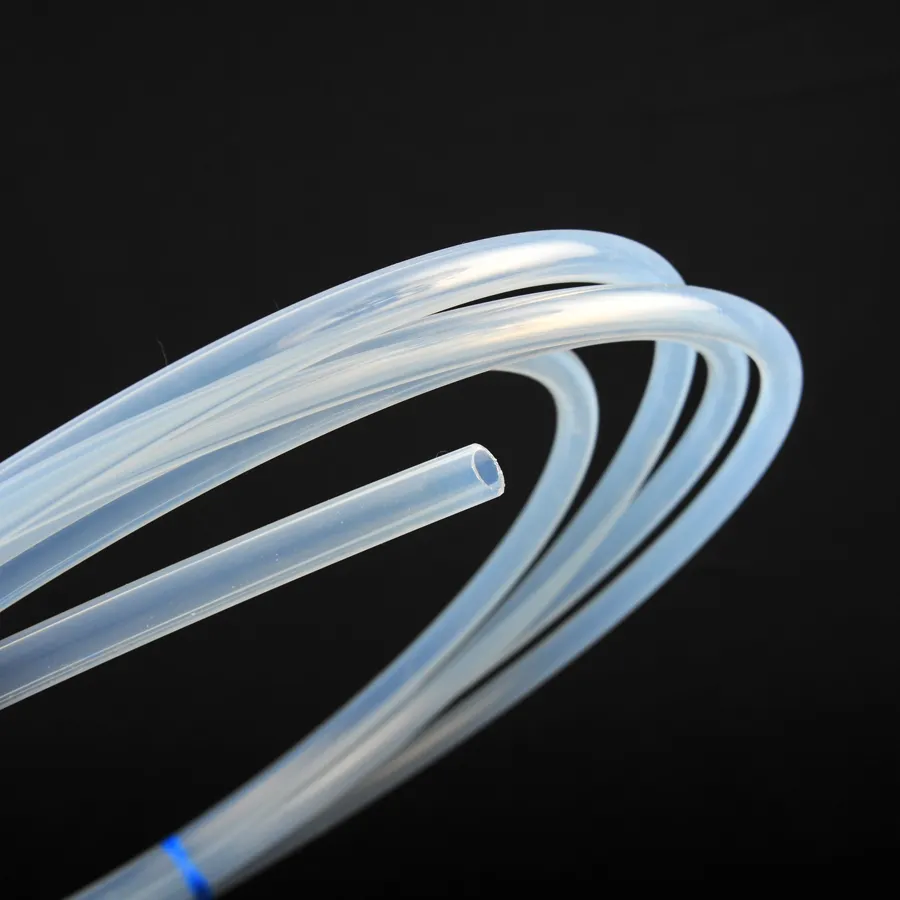
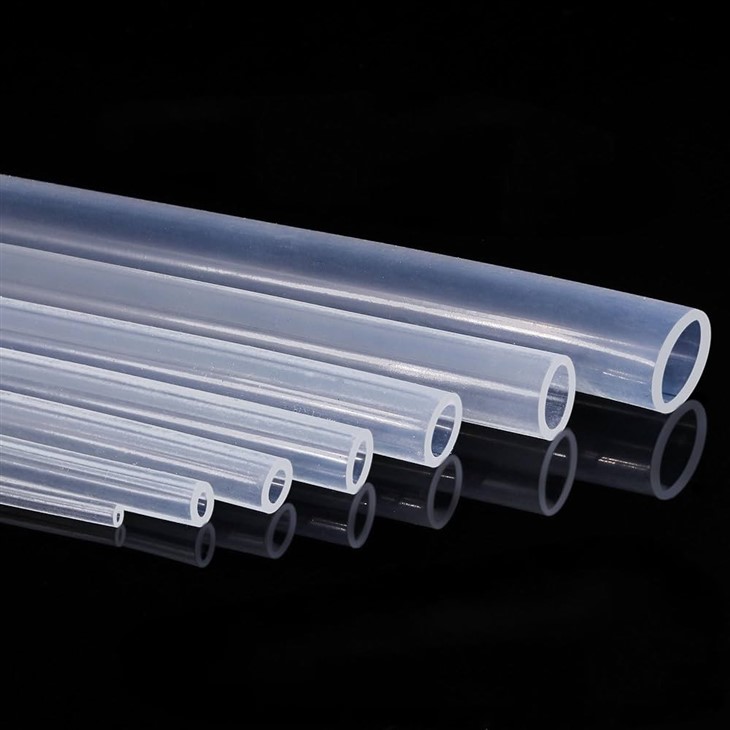
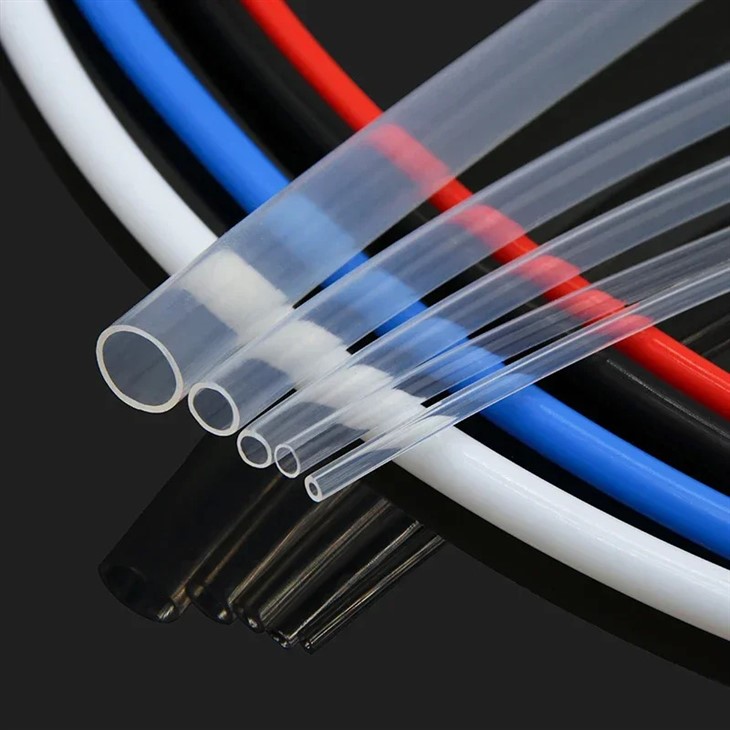
1/4 FEP TUBE FEP TUBING
Product Details
The 1/4 inch FEP tubing combines the chemical resistance of PTFE with improved flexibility and optical clarity. Its transparent design allows operators to easily monitor liquid flow, making it suitable for systems where visual inspection is important.
The tubing maintains excellent electrical insulation properties and resists UV exposure, moisture, acids, alkalis, and most industrial chemicals. With its smooth inner bore, it minimizes pressure loss and reduces the risk of particle buildup during fluid transfer.
Whether used in laboratory instruments, chemical processing equipment, beverage dispensing systems, or semiconductor manufacturing, our FEP tubing provides reliable performance even in harsh operating environments.
We offer continuous extrusion with tight dimensional tolerances and support customized production according to customer drawings or specifications.

Material
Our 1/4 FEP tubing is manufactured from premium Fluorinated Ethylene Propylene (FEP) resin. FEP is a melt-processable fluoropolymer that combines excellent chemical resistance with superior transparency and flexibility.
Unlike standard plastic tubing, FEP remains stable under continuous exposure to aggressive chemicals, high temperatures, and UV radiation. It features an exceptionally smooth surface that reduces contamination, improves fluid flow, and simplifies cleaning.
The material is non-toxic, odorless, and available in FDA-compliant grades for food contact and medical-related applications. Its outstanding dielectric properties also make it suitable for electrical insulation and electronic manufacturing.


Features
Temperature Resistance: Maintains reliable performance from -328°F to 392°F (-200°C to 20°C).
Chemical Inertness: Resistant to nearly all industrial chemicals, solvents, acids, and fuels.
Optical Clarity: Highly transparent, allowing for clear monitoring of fluid flow or "sight glass" applications.
UV Resistance: Excellent UV transmission and stability, making it ideal for water disinfection and outdoor use.
Mechanical Features: Lower coefficient of friction, high electrical breakdown voltage, and almost zero moisture absorption.
FEP (Fluorinated Ethylene Propylene) tubing is a flexible, transparent, and melt-processable fluoropolymer ideal for applications requiring visual inspection, UV resistance, and complex shaping (welding/sealing). PTFE (Polytetrafluoroethylene) tubing is more rigid, has superior chemical resistance, and operates at higher temperatures (up to 260°C). FEP is generally better for durability and flexibility, while PTFE is preferred for extreme heat and chemical inertness.
Key Differences Between FEP and PTFE Tubing
Transparency & Appearance
FEP is highly transparent and clear, allowing for visual inspection of fluid flow. PTFE is milky white to opaque.
Flexibility & Handling
FEP is softer and more flexible, making it easier to install and handle. PTFE is stiffer, rigid, and better for applications requiring shape retention.
Temperature Resistance
PTFE handles higher temperatures (up to 260°C/500°F). FEP has a lower maximum service temperature (approx. 200°C/392°F).
Processing
FEP is a thermoplastic that can be melted and welded, facilitating custom fabrication. PTFE is not melt-processable and requires specialized manufacturing techniques.
Chemical & UV Resistance
Both have excellent chemical resistance. FEP is superior in its resistance to UV light, making it better for outdoor, long-term exposure.
Coefficient of Friction
PTFE has a lower coefficient of friction (0.04-0.07) compared to FEP (0.05-0.09), making PTFE more slippery.
|
Physical Property |
PTFE |
FEP |
PFA |
|
Hardness Shore D |
50-65 |
50-65 |
50-65 |
|
Tensile Strength,psi |
2000-3000 |
4000 |
4200 |
|
Elongation at Break % |
200-450 |
250-330 |
400 |
|
Brittle Temperature,°F |
<450 |
<450 |
<450 |
|
Max.Continuous Operationg Temp.°F |
500 |
400 |
500 |
1/4" FEP (Fluorinated Ethylene Propylene) tubing is a highly clear, flexible, and chemically resistant fluoropolymer often used as a more transparent and flexible alternative to PTFE. It is widely used in ozone gas plumbing, groundwater sampling, and laboratory fluid handling due to its near-zero moisture absorption and resistance to harsh chemicals.
Application
Medical and Pharmaceutical: Used for catheters, medical devices, and in-vitro applications due to its biocompatibility and ability to be processed under cleanroom conditions.
Laboratory and Analytical: Employed in gas sampling, chromatography, and fluid transport owing to its low absorption properties and high chemical resistance.
Food and Beverage: Suitable for food processing and, dispensing systems because it does not impart taste, odor, or contaminants, ensured by its non-stick and inert properties.
Semiconductor Manufacturing: Utilized in clean, dry air lines, and chemical drain lines in semiconductor fabrication facilities.
Industrial and Chemical Handling: Used for transporting aggressive solvents, acids, and bases.
Electrical Insulation: Used as heat shrink or tubing for wire insulation due to its low dielectric constant and high temperature resistance.
Environmental Monitoring: Employed for UV disinfection, water testing, and sampling.

Payment&Shipping
|
Packing |
Carton / Pallet / Wooden Box |
|
Shipping method |
By express, By air, By Sea |
|
FOB Port |
Shenzhen |
|
Production time |
Depends on your qty(3~15 days) |
| OEM/ODM | Available |
| Payment | TT/Ali pay/Ali Assurance |

FAQ
Specifications
| Item | Specification |
|---|---|
| Product Name | 1/4 FEP Tube |
| Material | Virgin FEP Resin |
| Inner Diameter | 1/4" (6.35 mm) |
| Outer Diameter | Customized |
| Wall Thickness | Customized |
| Color | Transparent (Standard), Custom Colors |
| Length | Coil or Custom Cut Length |
| Operating Temperature | -200°C to +205°C |
| Hardness | Shore D 55-60 |
| Transparency | High |
| Chemical Resistance | Excellent |
| UV Resistance | Excellent |
| Electrical Insulation | Excellent |
| Compliance | FDA, RoHS, REACH (Available upon request) |
| Manufacturing Method | Precision Extrusion |
| OEM & ODM | Supported |


