

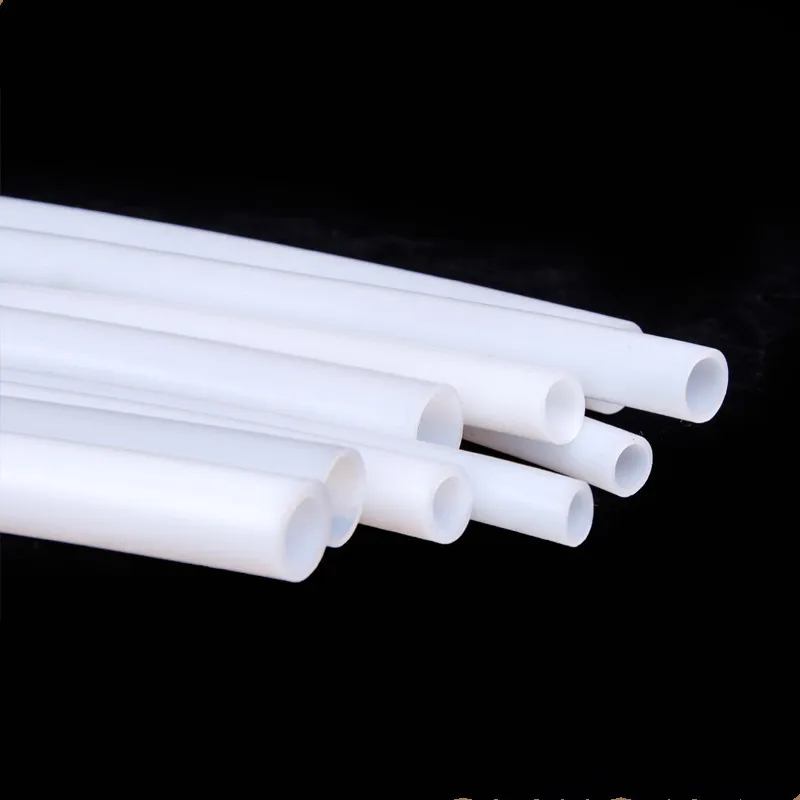
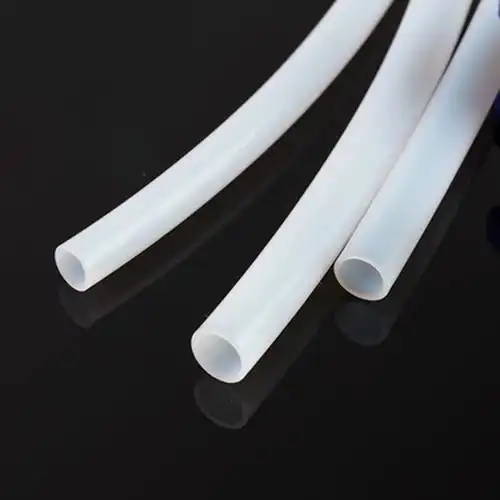
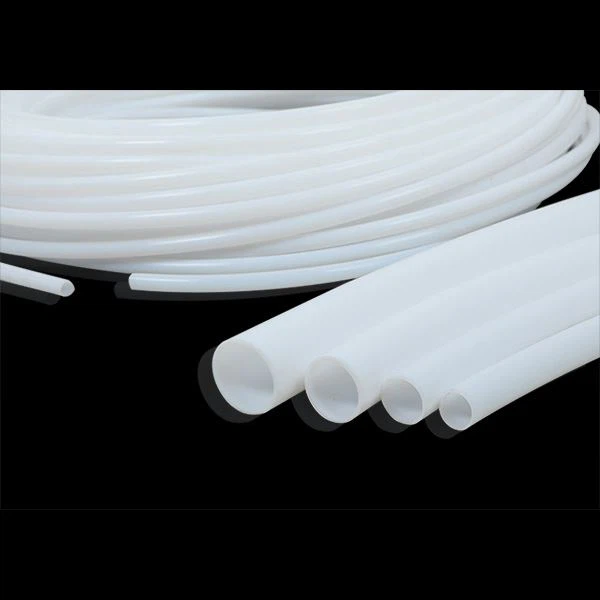
1/ 2 x 3/4 *100ft Teflon PTFE Tubing
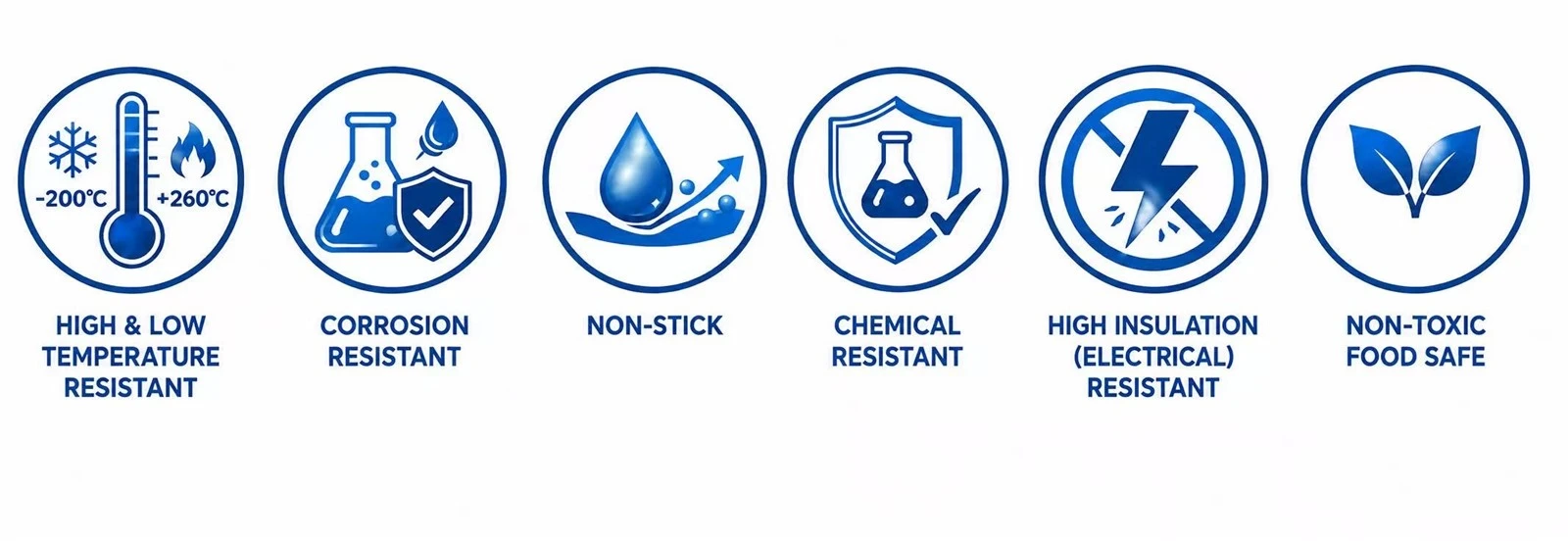
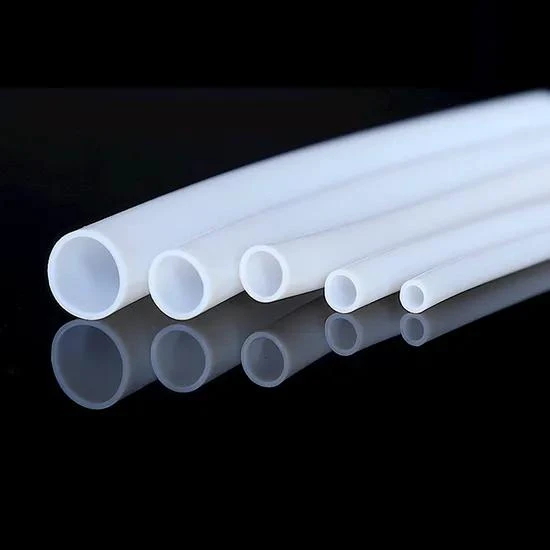
1/2 × 3/4 × 100 ft PTFE Tubing is a precision-extruded fluoropolymer tube designed for demanding fluid handling, chemical processing, and industrial applications. With a 1/2-inch ID, 3/4-inch OD, and 100 ft continuous length, it provides a practical combination of flow capacity, dimensional consistency, and installation flexibility.Below are the features of products.These properties make it suitable for transferring a wide range of chemicals, fluids, and process media while helping maintain reliable system performance.
Manufacturing Procedure
Raw Material Selection
Virgin PTFE resin is selected according to the required tubing application, dimensional requirements, temperature range and chemical resistance. The raw material is inspected before production to ensure consistent material quality and processing performance.
◆
PTFE Resin Preparation
The PTFE resin is carefully prepared and conditioned before forming. Proper handling of the resin helps maintain stable extrusion performance and contributes to uniform tube dimensions and surface quality.
◆
Preforming
The prepared PTFE resin is compressed into a preform using a controlled molding process. The preform provides a consistent material structure for the following extrusion operation.
◆
PTFE Extrusion
The PTFE preform is transferred to a precision extrusion line. The material is gradually pushed through a specially designed extrusion die to form the tubular profile.It is controlled according to the required inner diameter, outer diameter and wall thickness. Process parameters are monitored to maintain dimensional consistency throughout the production run.
◆
Sintering
After extrusion, the formed PTFE tube passes through a controlled heating and sintering process. The temperature profile is carefully controlled to allow the PTFE particles to fuse and form a continuous tube structure.
The heating and cooling stages are adjusted to reduce dimensional variation and maintain the required mechanical and thermal properties.
◆
Cooling and Dimensional Stabilization
The sintered tubing is gradually cooled under controlled conditions. Cooling parameters are managed to minimize deformation and dimensional changes.
The tube diameter, wall thickness and roundness are checked during production to maintain consistent specifications.
◆
Online Inspection
During extrusion, the tubing is continuously inspected for key dimensions and appearance. Typical inspection points include:
Inner diameter
Outer diameter
Wall thickness
Roundness
Surface condition
Length
Dimensional consistency
Any dimensional deviation outside the specified tolerance can be identified and adjusted during production.
◆
Cutting or Continuous Winding
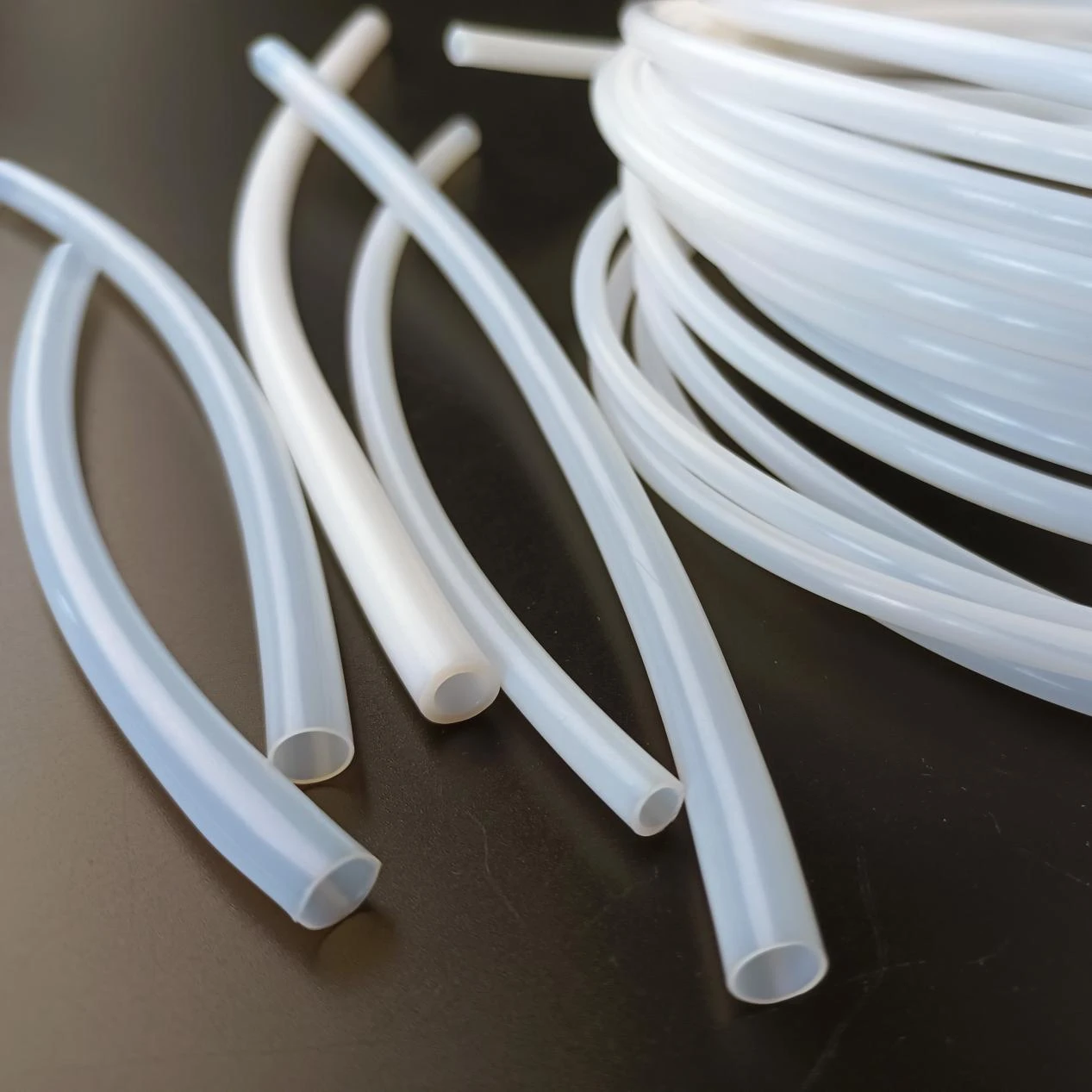
After inspection, the PTFE tubing can be supplied in continuous lengths or wound onto a suitable spool or coil.
◆
Final Quality Inspection
Before shipment, finished tubing is inspected according to the customer's specifications. Depending on the application, inspection may include dimensional measurement, visual inspection, length verification and other agreed quality tests.
◆
Cleaning and Packaging
The finished PTFE tubing is cleaned to remove production contaminants and carefully packaged to prevent deformation, contamination or damage during transportation.
PTFE vs FEP
| PTFE vs FEP Comparison | ||
| Property | PTFE | FEP |
| Full Name | Polytetrafluoroethylene | Fluorinated Ethylene Propylene |
| Temperature Resistance | Higher | High |
| Continuous Service Temperature | Typically up to about 260°C | Typically up to about 200°C |
| Chemical Resistance | Good | Good |
| Friction Coefficient | Very low | Low |
| Transparency | Usually opaque or translucent | Naturally transparent |
| Flexibility | Relatively rigid | More flexible |
| Melt Processability | Difficult to melt-process | Melt-processable |
| Processing | Paste extrusion, ram extrusion, molding | Conventional melt extrusion |
| Surface Properties | Non-stick, low adhesion | Non-stick, low adhesion |
| Electrical Insulation | Good | Good |
| Typical Applications | High-temperature and demanding industrial applications | Transparent tubing, fluid transfer and applications requiring easier processing |
The final material selection should consider the operating temperature, chemical media, pressure, flexibility, transparency, dimensional requirements and application environment.
Applications
Chemical Fluid Transfer:PTFE tubing is widely used for transferring acids, alkalis, solvents and other corrosive fluids. Its chemically resistant fluoropolymer structure helps maintain tubing performance when exposed to a wide range of aggressive media.
Industrial Equipment: The tubing can be integrated into industrial machinery, processing equipment and fluid handling systems. Its low friction surface and resistance to chemical exposure make it suitable for demanding operating environments.
Laboratory Equipment: PTFE tubing is commonly used in laboratory fluid transfer, sampling systems, analytical equipment and chemical handling setups where clean surfaces and chemical resistance are required.
Semiconductor and High-Purity Systems: PTFE tubing can be used in high-purity fluid handling and semiconductor equipment. Its low surface adhesion and chemical resistance are useful for systems handling process chemicals and sensitive fluids.
Electrical and Electronic Applications: PTFE provides excellent electrical insulation and can be used for wire protection, cable insulation, component protection and electrical equipment assemblies, particularly where temperature resistance is also required.
Advantages
Customization
PTFE tubing can be manufactured in different dimensions, lengths, material grades and colors according to application requirements. Custom ID, OD, wall thickness and cut lengths can be discussed for OEM projects.
Dimensional Stability
PTFE tubing maintains relatively stable dimensions under suitable operating conditions. Proper extrusion and sintering control helps achieve consistent ID, OD and wall thickness throughout the production length.
Smooth Internal Surface
The smooth bore helps support consistent flow and reduces the tendency for particles or materials to adhere to the internal wall.
Payment&Shipping
|
Packing |
Carton / Pallet / Wooden Box |
|
Shipping method |
By express.By air,By Sea |
|
FOB Port |
Shenzhen |
|
Production time |
Depends on your qty(3~15 days) |
|
OEM/ODM |
Available |
|
Payment |
TT/Ali pay/Ali Assurance |
FAQ
Q1.Is the 100 ft tubing supplied as one continuous length?
A:Yes. The tubing can be supplied as a continuous 100 ft length, subject to production and packaging requirements. Continuous tubing is convenient for longer installation runs and can reduce the number of joints.
Q2.What is the pressure rating of the tubing?
A:The pressure rating depends on the tube ID, OD, wall thickness, operating temperature, PTFE grade and working conditions. Higher temperatures generally affect pressure capability. A specific pressure recommendation can be provided based on the application requirements.
Q3.Can you provide cut-to-length PTFE tubing?
A:Yes. In addition to 100 ft rolls, tubing can be supplied in specified cut lengths according to customer requirements. Custom lengths should be confirmed before production.
Q4.How should PTFE tubing be stored?
A:Store the tubing in a clean, dry environment away from direct sunlight, excessive heat and sharp objects. Avoid excessive compression or bending during storage to help maintain its original shape.
Q5.Can the tubing be customized?
A:Yes. Customization is available for inner diameter, outer diameter, wall thickness, length, material grade, color and other specifications, depending on the project requirements.
Q6.Is the tubing flexible?
A:Standard PTFE tubing has some flexibility, but its flexibility depends on the tube dimensions, wall thickness and PTFE grade. For applications requiring frequent bending, flexible PTFE formulations or other fluoropolymer tubing options may be considered.
Q7.Can PTFE tubing be manufactured according to customer drawings?
A:Yes. Custom PTFE tubing can be manufactured according to customer drawings, samples or technical specifications. Dimensional tolerances and application requirements can be reviewed before production.
Q8.How is PTFE tubing packaged for shipment?
A:PTFE tubing can be supplied in coils, rolls or specified cut lengths. Packaging can be selected according to tube dimensions, length and transportation requirements to help prevent deformation or damage during shipment.
Q9.Can PTFE tubing be supplied in continuous rolls?
A:Yes. PTFE tubing can be supplied in continuous lengths or rolls, depending on the tube size, wall thickness and production requirements. Specific roll lengths can be discussed before production.
Q10.Can you provide samples before bulk production?
A:Yes. Samples can be provided for dimensional inspection, material evaluation and application testing before bulk production.
Size List
|
Description |
ID(inch) |
OD(inch) |
ID(mm) |
OD(mm) |
|
PTFE TUBE |
0.126" |
0.205" |
3.2004 |
5.207 |
|
PTFE TUBE |
0.189" |
0.256" |
4.8006 |
6.5024 |
|
PTFE TUBE |
0.252" |
0.319" |
6.4008 |
8.1026 |
|
PTFE TUBE |
0.374" |
0.441" |
9.4996 |
11.2014 |
|
PTFE TUBE |
0.5" |
0.579" |
12.7 |
14.7066 |
|
PTFE TUBE |
5/8 |
3/4 |
15.8 |
19.0 |
|
PTFE TUBE |
3/4 |
7/8 |
19.0 |
22.0 |
|
PTFE TUBE |
1 |
1 1/8 |
25.4 |
28.5 |
|
PTFE TUBE |
1/32 |
1/16 |
0.8 |
1.6 |
|
PTFE TUBE |
3/32 |
5/32 |
2.4 |
4.0 |
|
PTFE TUBE |
3/16 |
1/4 |
4.8 |
6.35 |
|
PTFE TUBE |
1/4 |
5/16 |
6.35 |
7.9375 |
|
PTFE TUBE |
5/16 |
7/16 |
7.9375 |
11.1125 |
|
PTFE TUBE |
3/8 |
7/16 |
9.525 |
11.1125 |
|
PTFE TUBE |
7/16 |
9/16 |
11.1125 |
14.2875 |
|
PTFE TUBE |
1/2 |
9/16 |
12.7 |
14.2875 |
|
PTFE TUBE |
9/16 |
11/16 |
14.2875 |
17.4625 |
|
PTFE TUBE |
7/8 |
1 |
22.225 |
25.4 |
|
PTFE TUBE |
1/16 |
1/8 |
1.6 |
3.2 |
|
PTFE TUBE |
1/8 |
3/16 |
3.2 |
4.8 |
|
PTFE TUBE |
1/8 |
1/4 |
3.2 |
6.35 |
|
PTFE TUBE |
3/16 |
5/16 |
4.7625 |
7.9375 |
|
PTFE TUBE |
1/4 |
3/8 |
6.35 |
9.53 |
|
PTFE TUBE |
3/8 |
1/2 |
9.53 |
12.7 |
|
PTFE TUBE |
1/2 |
5/8 |
12.7 |
15.88 |
|
PTFE TUBE |
5/32 |
1/4 |
4.0 |
6.35 |


