

Beyond the Quotation: What Happens After You Place an Order for PTFE Tubing?
By Zetai – Hubei Zetai New Material Co., Ltd.
Introduction: A Purchase Order Is Only the Beginning
When purchasing PTFE tubing from an overseas manufacturer, most buyers naturally spend time comparing quotations, checking product specifications, and negotiating delivery dates. These are important steps, but they do not tell the whole story.
In our experience, the real difference between suppliers often becomes visible after an order has been confirmed.
Can the manufacturer maintain the same dimensions throughout a production batch? What happens if a production issue is discovered halfway through an order? How are products protected during storage and international transportation? Can the supplier reproduce the same specifications when the customer places another order three or six months later?
These questions may not appear in the first quotation, but they have a direct influence on purchasing costs, production schedules, and the reliability of the customer's own products.
At Zetai, we believe that manufacturing PTFE tubing is not simply about producing a tube that meets a drawing. It is about establishing a repeatable process that allows customers to receive consistent products, communicate technical requirements clearly, and maintain a dependable supply relationship.
We would like to share how we look at the manufacturing and delivery process from the perspective of a PTFE tubing producer. Rather than discussing only the familiar properties of PTFE, this article focuses on the details that overseas buyers may not always see when working with a manufacturer.
1. Why a Good First Sample Does Not Always Guarantee a Good Production Order
One situation that deserves more attention in industrial purchasing is the difference between sample quality and mass-production consistency.
A customer may receive a sample, check its dimensions, install it in an assembly, and confirm that it works correctly. The project then moves into volume production. At this stage, the buyer expects the remaining products to perform in exactly the same way.
However, a sample and a production batch are not the same manufacturing challenge.
A small sample quantity can sometimes be produced and inspected under particularly close supervision. A larger order requires the manufacturer to maintain process stability over a much longer production period.
For PTFE tubing, several factors can influence the final result:
Raw material consistency.
Material preparation and conditioning.
Extrusion equipment and operating conditions.
Production speed and process stability.
Cooling and dimensional control.
Cutting and handling procedures.
Inspection methods and measurement accuracy.
A minor change in one of these factors may affect the finished tube. For example, dimensional variation can influence whether a tube fits correctly into a connector or an assembly. Surface defects may become more noticeable when tubing is used in a visible application. Differences in wall thickness can also affect the mechanical behavior of the finished product.
This is why we consider production repeatability an important part of manufacturing quality.
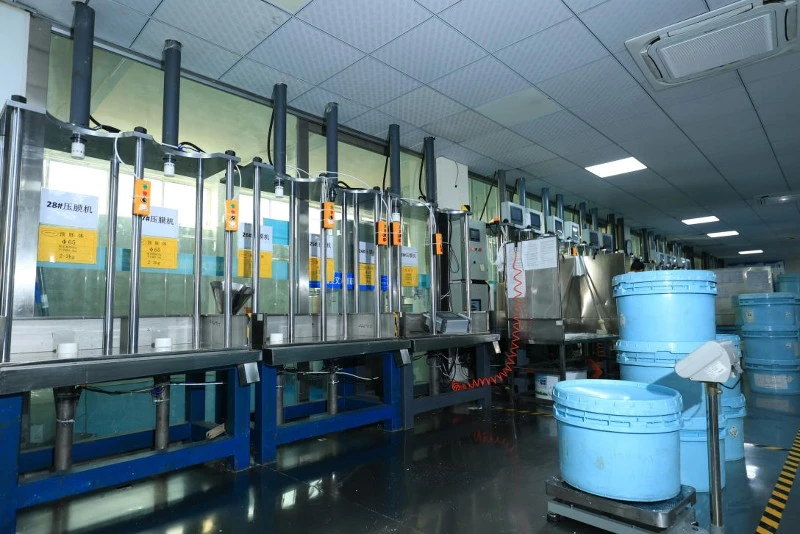
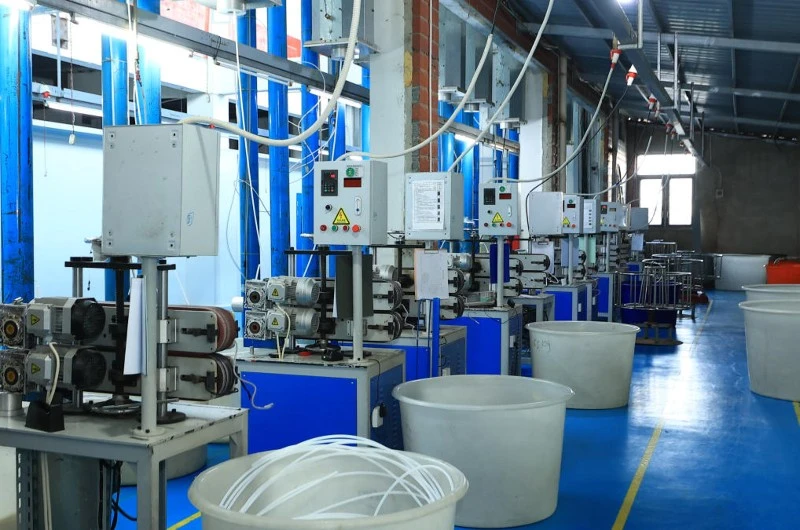
At Zetai, our production facilities include multiple extrusion lines and dedicated equipment for different fluoropolymer tubing requirements. Our production arrangements are designed to support both standard products and customized orders.
But equipment alone is not enough. A reliable manufacturing process also depends on operators understanding the production requirements, inspection personnel following consistent procedures, and production records being properly maintained.
For buyers, one useful question to ask a supplier is not simply whether it can produce a particular size, but whether it can maintain that size consistently across repeated production batches.
That is a much more meaningful way to evaluate a manufacturer's capability.
2. The Importance of Raw Material Management
The quality of finished PTFE tubing begins long before the extrusion process.
PTFE resin is an important starting point, and differences in material grade or characteristics can influence processing behavior and final product performance.
When discussing raw materials, buyers sometimes focus only on whether the supplier uses virgin PTFE or recycled material. Although this distinction can be important, it should not be the only consideration.
A professional purchasing evaluation should also consider whether the material is appropriate for the intended application and whether the manufacturer can maintain consistency between material batches.
For example, a customer producing precision components may have different material requirements from a company purchasing tubing for general industrial fluid transfer.
Medical applications may require additional documentation and material controls. Electrical insulation applications may place greater emphasis on dielectric properties. Chemical processing customers may need to evaluate the compatibility of the selected material with particular fluids and operating conditions.
There is no single material specification that automatically suits every application.
At Zetai, we pay attention to material selection at the beginning of a project because changing the material after production has started may affect processing conditions, inspection requirements, and delivery schedules.
We also encourage customers to communicate their requirements clearly. If a project requires virgin PTFE, a particular material grade, or specific compliance documentation, these details should be confirmed before the purchase order is finalized.
Another point worth mentioning is material traceability. For customers operating under formal quality-management procedures, knowing which material batch was used can be important when reviewing production records or investigating a quality concern.
A quotation that only says "PTFE material" may not provide enough information for a demanding application. Buyers should confirm the material description and any required supporting documents before placing an order.
3. Dimensional Consistency: Small Differences Can Create Large Problems
PTFE tubing is often a relatively small component within a much larger machine or system. Nevertheless, its dimensions can have a considerable effect on assembly and operation.
The most frequently discussed dimensions are inner diameter (ID), outer diameter (OD), and wall thickness. Depending on the application, length, concentricity, and dimensional tolerance may also need to be controlled.
Consider a simple example.
A customer purchases PTFE tubing to connect two components in an automated fluid-handling system. The specified outer diameter is designed to fit a particular connector. If the actual OD varies beyond the acceptable range, installation may become difficult or the connection may not function as intended.
The same issue can occur with inner diameter. In a small-bore tube, even a relatively minor dimensional difference can affect the available passage area.
Wall thickness is equally important. Two tubes with the same outer diameter but different wall thicknesses will have different internal diameters and mechanical characteristics.
For this reason, we do not recommend evaluating PTFE tubing only by its nominal size.
Buyers should pay attention to the complete dimensional specification, including:
Nominal inner diameter.
Nominal outer diameter.
Wall thickness.
Permitted dimensional deviation.
Required tube length.
Concentricity, when relevant.
Measurement method and inspection frequency.
It is also important to understand that achievable tolerances depend on tube diameter, wall thickness, product structure, material, and manufacturing process.
A tolerance that is practical for one size may not be appropriate for another.
At Zetai, customized tubing can be developed according to customer drawings and technical requirements. For projects involving thin-wall tubing, medical tubing, or special structures, we recommend reviewing the dimensional requirements before mass production begins.
The purpose is straightforward: both the customer and manufacturer should agree on what constitutes an acceptable product before the first production batch is completed.
4. What Should Happen During Production Inspection?
Quality inspection should not be treated as an activity that takes place only after all products have been manufactured.
By the time a large batch reaches final inspection, correcting a problem may already require additional production time and material.
A more practical approach is to pay attention to quality at different stages of manufacturing.
Raw material inspection
The first stage concerns the material entering production. Depending on the project, relevant checks may include material identification, documentation, and verification against the agreed purchasing requirements.
Production monitoring
During extrusion, the manufacturing team needs to pay attention to operating conditions and the stability of the production process.
For PTFE tubing, dimensional consistency is particularly important. Production monitoring helps identify potential changes before they affect a significant quantity of finished products.
Dimensional inspection
Finished tubing should be checked against the agreed specifications.
Typical inspection items include:
Inner diameter.
Outer diameter.
Wall thickness.
Length.
Appearance.
Surface condition.
Additional checks may be necessary for special structures or demanding applications.
Final inspection
Before shipment, the finished products should undergo a final review based on the customer's order requirements.
The inspection scope should be established before production, rather than decided after a disagreement occurs.
For some projects, dimensional inspection may be sufficient. Others may require additional testing, documentation, or application-specific validation.
A manufacturer should be able to explain what has been inspected and what the inspection results actually demonstrate.
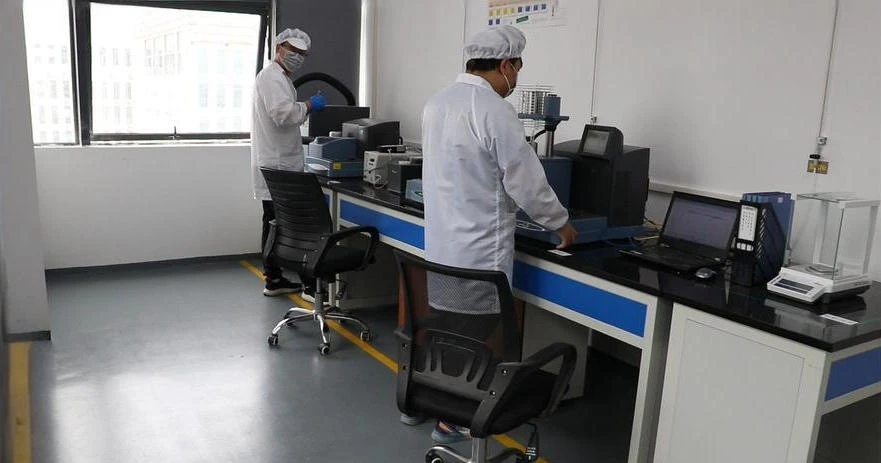
At Zetai, our website describes a multi-stage manufacturing and inspection approach, with batch inspection before products leave the factory. We also provide inspection reports and certificates of conformity according to applicable product and order requirements.
We believe that transparent inspection information is more useful to buyers than general statements such as "100% perfect quality."
No manufacturing process should rely on promises alone. Quality needs to be supported by defined requirements and verifiable inspection procedures.
5. Packaging Is Part of Product Quality, Not an Afterthought
Packaging may seem like a relatively simple part of an order, but it can influence the condition in which PTFE tubing arrives at the customer's facility.
This is particularly relevant for long-length tubing, thin-wall products, small-diameter tubing, and products with special cleanliness requirements.
During transportation, products may be exposed to vibration, compression, repeated handling, dust, moisture, or changes in environmental conditions.
If packaging is not suitable for the product, damage may occur even when the tubing was manufactured correctly.
For example, excessive bending or compression during packing may create problems for certain thin-wall or precision products. Unprotected tube ends may also collect dust or become damaged during transportation.
Different products require different packaging arrangements.
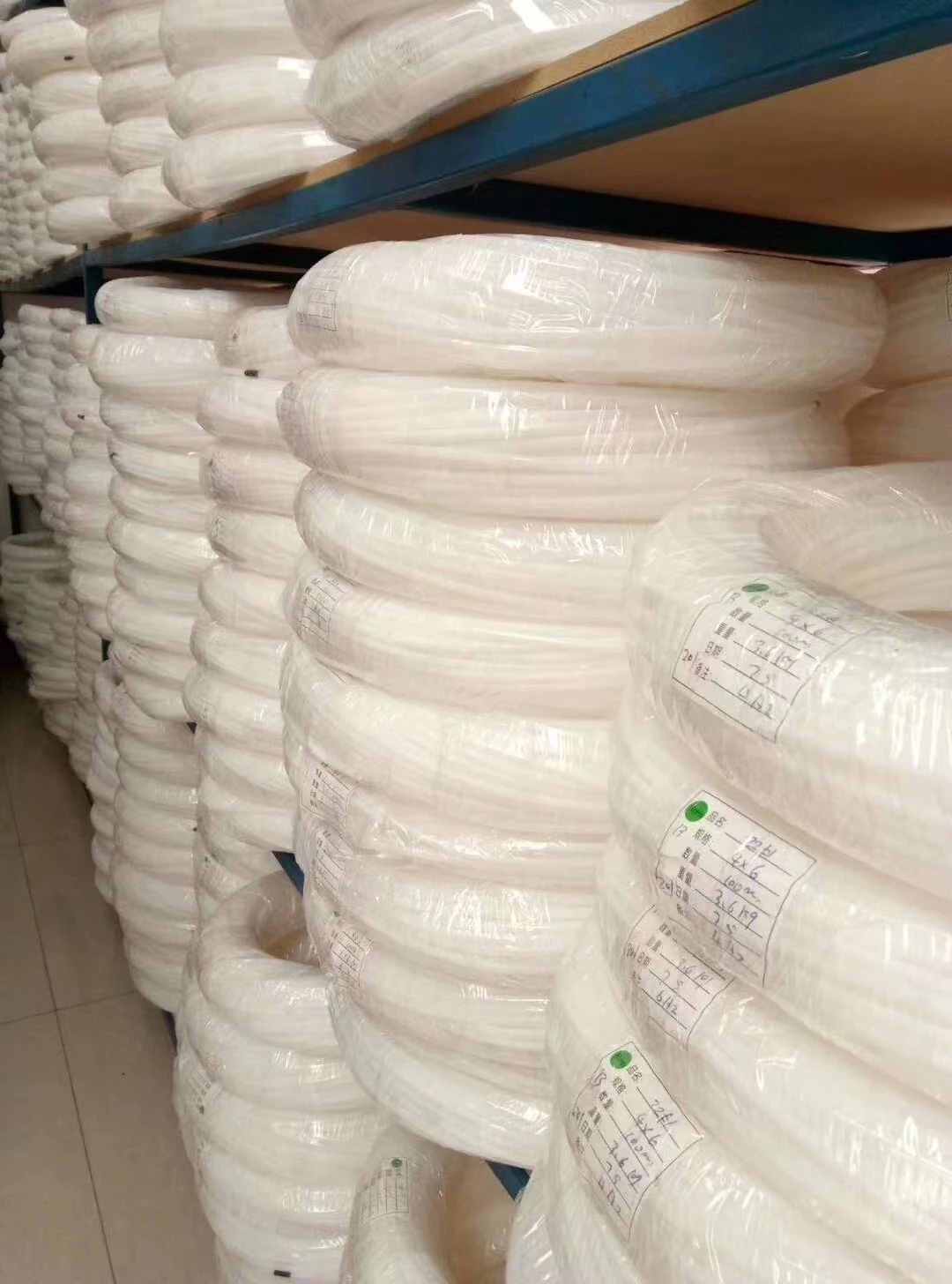
For standard industrial tubing, suitable coils, protective bags, cartons, and pallets may be sufficient. For precision or cleanliness-sensitive products, additional protective packaging may be necessary.
Long straight tubes may require a different approach from flexible coiled tubing.
When preparing an overseas order, we suggest confirming the following details:
Whether the tubing should be supplied in coils or straight lengths.
Whether individual pieces need protective bags.
Whether both tube ends require sealing.
Whether product labels are required.
Whether cartons need customer-specific markings.
Whether pallets or wooden cases are necessary.
Whether the packaging needs to accommodate air or sea transportation.
These details are worth discussing before shipment.
For international buyers, good packaging is also a matter of receiving efficiency. Clearly marked cartons and organized product quantities can reduce unnecessary sorting and help warehouse staff identify the correct materials more quickly.
At Zetai, packaging is considered part of order preparation. Our packaging arrangements can be adjusted according to product dimensions, order quantities, and transportation requirements.
6. Delivery Time: Why Production Capacity Is Only One Part of the Answer
When buyers request a quotation, delivery time is often one of the first questions they ask.
A supplier may advertise a large production capacity, but that figure does not automatically mean every order can be shipped immediately.
Actual delivery depends on several factors:
Product specifications.
Order quantity.
Raw material availability.
Production scheduling.
Whether special tooling is required.
Inspection and documentation requirements.
Packaging arrangements.
Shipping method.
Standard products and customized products should not necessarily have the same lead time.
A standard size that is already part of a manufacturer's regular production range may be easier to schedule than a special thin-wall tube or a product requiring a new structure.
Similarly, a small trial order may require a different production arrangement from a large repeat order.
This is why we encourage customers to distinguish between production lead time and total delivery time.
Production lead time refers to the time required to manufacture and prepare the products. Total delivery time also includes inspection, packing, export arrangements, and transportation.
For overseas purchasing departments, this distinction can make a significant difference when planning inventory.
At Zetai, our website lists more than 10,000 square meters of production facilities, over 45 extrusion production lines, and a reported monthly production capacity of 120 tons. It also describes production arrangements for standard and customized orders.
These resources help us support different order requirements, but we still believe that each delivery schedule should be confirmed according to the actual product and order quantity.
A realistic delivery commitment is more valuable than an aggressive date that cannot be maintained.
7. Why Repeat Orders Need More Attention Than First Orders
A first order is often treated as a test of whether a supplier can manufacture the required product.
A repeat order is a different test: can the manufacturer reproduce the agreed product consistently?
For many industrial buyers, repeat purchasing is where the real commercial value of a supplier relationship becomes clear.
Imagine that a customer has approved a particular PTFE tube for use in an equipment assembly. The first order is received, inspected, and accepted. Several months later, the customer needs another batch.
Ideally, the second order should not require the entire technical discussion to start again.
The manufacturer should understand the previously approved dimensions, material requirements, packaging method, and inspection criteria.
However, this requires more than keeping an old quotation in an email folder.
A practical repeat-order process should preserve important information, including:
Approved product drawings.
Final dimensional specifications.
Material requirements.
Approved samples or reference standards.
Inspection requirements.
Packaging specifications.
Product identification.
Previous quality feedback.
When these details are properly managed, the customer can reduce repeated communication and the risk of misunderstandings.
There is also an important distinction between reproducing the same nominal dimensions and reproducing the same complete product requirements.
For example, if the original order included a particular material grade, dimensional tolerance, or packaging instruction, these details should not disappear when a new purchase order is issued.
At Zetai, we value long-term cooperation because it allows both sides to develop a better understanding of the customer's requirements.
For a manufacturer, repeat orders also provide an opportunity to improve production planning and identify ways to make supply more efficient.
For a buyer, a supplier that understands previous orders can make procurement less complicated.
That is one reason we believe a good supplier relationship should be built around consistent execution, not simply competitive pricing.
8. How Manufacturers Should Handle Customer Complaints and Quality Issues
No serious manufacturer should assume that every production order will be completely free of unexpected situations.
What matters is how a supplier responds when a customer identifies a problem.
For an overseas buyer, a quality issue can be particularly inconvenient. The products may already have arrived at a warehouse, entered an assembly process, or been scheduled for delivery to another customer.
A delayed response can create additional costs even when the original problem is relatively small.
We believe a responsible manufacturer should approach a complaint through investigation rather than immediately offering an explanation without evidence.
A reasonable quality-response process should include several steps.
First, understand the problem clearly.
The manufacturer needs to know which product is involved, the affected quantity, the batch information, and the specific issue reported by the customer.
Photographs, measurement results, samples, and inspection records can help clarify the situation.
Second, review the original requirements.
Both sides should refer to the approved drawing, purchase order, agreed tolerance, and any special technical requirements.
This is important because some disagreements are caused by differences in interpretation rather than an actual manufacturing defect.
Third, investigate the production records.
The manufacturer should review the relevant material information, production arrangements, and inspection results.
If the issue concerns dimensional variation, for example, it may be necessary to compare measurements from different locations or pieces within the batch.
Fourth, identify the cause and corrective action.
A useful response should explain what happened, what has been done to address it, and how similar issues will be prevented where possible.
Simply replacing a product without understanding the cause may solve an immediate problem but does not necessarily prevent recurrence.
Finally, maintain communication with the customer.
Overseas buyers should not have to send repeated emails just to find out whether a quality investigation is progressing.
Even when a complete answer requires additional time, regular and honest communication helps both parties manage the situation.
At Zetai, we regard after-sales service as part of manufacturing responsibility. Our objective is not only to complete an individual transaction, but also to maintain customer confidence through practical communication and follow-up.
9. Technical Communication: Why the Details Matter Before Production Starts
One challenge in international manufacturing is that customers and suppliers may use different terminology when describing the same product.
A buyer may send a photograph and request a PTFE tube with a particular diameter. However, the photograph alone may not contain enough information to establish the actual manufacturing requirements.
For example, a customer may specify an outer diameter but leave the wall thickness undefined. Another buyer may provide a drawing but not indicate the acceptable tolerance.
Sometimes the customer describes the application but does not identify the actual fluid, operating temperature, or pressure conditions.
These gaps can lead to unnecessary revisions after production has started.
We recommend establishing a clear technical communication process before confirming an order.
For a standard PTFE tube, the discussion should normally include:
|
Information |
Details to confirm |
|---|---|
|
Material |
PTFE grade and material requirements |
|
Inner diameter |
Nominal ID and tolerance |
|
Outer diameter |
Nominal OD and tolerance |
|
Wall thickness |
Required thickness |
|
Length |
Coil length or cut length |
|
Color |
Natural white, black or other specified color |
|
Application |
Intended use and operating environment |
|
Quantity |
Trial quantity or production volume |
|
Packaging |
Coil, straight length, carton or special packing |
|
Documents |
Inspection report or required certificates |
For customized products, additional information may be necessary.
This can include product drawings, cross-sectional structures, bending requirements, connection details, and special surface or cleanliness requirements.
We also recommend that customers identify which requirements are mandatory and which are preferences.
For example, a specific tolerance may be essential for assembly, while packaging color may simply be a preference.
Separating these requirements helps the manufacturer understand where engineering attention is most important.
At Zetai, we welcome drawings, samples, and technical discussions before production. Our custom tubing services cover different dimensions and structures, and we support OEM/ODM projects as well as small-batch trials and volume production.
10. Why Small Trial Orders Can Be Valuable for New Projects
Some buyers prefer to place a large order immediately when they find a competitive quotation. Others prefer to begin with a small quantity.
For a new product or an unfamiliar supplier, we generally consider a trial order a useful way to reduce uncertainty.
A sample or trial batch allows the customer to evaluate more than the appearance of the tubing.
It provides an opportunity to check:
Whether the dimensions match the drawing.
Whether the tubing fits the intended connector.
Whether the material is appropriate for the application.
Whether the tube can be installed without unexpected difficulty.
Whether the product performs as expected under actual operating conditions.
Whether the packaging is suitable for the customer's production environment.
For certain applications, the customer may also need to conduct additional tests before approving the product.
Medical, automotive, and other regulated or safety-critical applications may require formal validation procedures. A simple dimensional inspection should not be treated as a substitute for application qualification.
Another benefit of a trial order is that it gives both parties an opportunity to identify practical improvements before volume production.
For instance, the customer may discover that the specified tube length is inconvenient for assembly, or that a different packaging arrangement would make material handling easier.
These details are generally easier to address during the development stage than after a large quantity has been manufactured.
At Zetai, we support small-batch trial production for customized projects where production feasibility and sample approval need to be established before volume orders.
We do not believe every project needs to begin with a large purchase. The appropriate order quantity should depend on the application, product complexity, and customer's validation requirements.
11. International Shipping and Inventory Planning
For overseas buyers, purchasing PTFE tubing involves more than finding a manufacturer that can produce the required specifications.
The products must also reach the customer's facility in an acceptable condition and at a time that supports the customer's production schedule.
International transportation introduces additional considerations.
Air freight may be appropriate for urgent or relatively small shipments, while sea freight may be more economical for larger orders. Express delivery can be convenient for samples or development quantities.
The most suitable method depends on the order size, destination, urgency, and transportation cost.
Inventory planning is another important consideration.
A buyer who purchases too much material may increase storage costs and tie up working capital. A buyer who purchases too little may face production interruptions when additional material is needed.
There is no universal inventory strategy for every company.
However, repeat purchasing can become more efficient when customers and manufacturers communicate their expected demand in advance.
For example, if a customer regularly consumes a particular PTFE tube specification, the manufacturer may be able to discuss a more suitable production arrangement for recurring orders.
This does not mean every customer needs to maintain a large inventory. Instead, it means production planning should consider the customer's actual consumption pattern.
We also suggest that buyers confirm several logistics details before shipment:
Final shipping address and consignee information.
Agreed delivery terms.
Carton dimensions and gross weight.
Packaging and labeling requirements.
Required export documentation.
Estimated transportation schedule.
Special handling requirements, if applicable.
These details may appear administrative, but they can influence the efficiency of the entire purchasing process.
At Zetai, we work with overseas customers on product preparation, packaging, and shipping arrangements according to the requirements of each order.
12. What Makes a Manufacturer a Long-Term Manufacturing Partner?
A supplier may offer a competitive quotation and deliver an acceptable first order. However, becoming a long-term manufacturing partner requires a broader set of capabilities.
From our perspective, a dependable PTFE tubing manufacturer should be able to demonstrate several things.
Stable manufacturing resources
Production equipment and factory organization should be suitable for the products being supplied.
A manufacturer producing only standard industrial tubing may have different capabilities from one supporting precision medical tubing, thin-wall structures, and customized products.
Buyers should evaluate whether the supplier's actual equipment and production arrangements match their requirements.
An established quality-management approach
Quality should not depend entirely on the experience or attention of one individual operator.
Documented procedures, defined inspection requirements, and appropriate quality-management systems help create more consistent manufacturing practices.
Zetai's company profile lists IATF 16949, ISO 13485, ISO 14001, and ISO 45001 certifications. These systems relate to different areas of management and should be evaluated according to the specific project and certification scope.
Technical support
A good manufacturer should be able to discuss product specifications and identify missing information before production.
This is especially important for customized tubing, where dimensions, material selection, and product structure may need to be reviewed together.
Communication efficiency
International business involves different time zones, languages, and working procedures.
Clear quotations, timely responses, and accurate order confirmations help reduce unnecessary communication.
A buyer should not need to repeatedly explain the same specification to different departments.
Consistent follow-up
A supplier relationship should continue after shipment.
The manufacturer should be willing to receive feedback, review product performance, and discuss improvements for future orders.
For us, these factors are closely connected. Production capability creates the foundation, quality management supports consistency, and communication makes cooperation practical.
None of these factors should be evaluated in isolation.
13. Our Manufacturing Perspective at Zetai
At Hubei Zetai New Material Co., Ltd., we specialize in fluoropolymer tubing and related products, including PTFE, FEP, and PFA tubing.
Our website introduces our manufacturing facilities, product range, technical resources, and customized production services for industrial and medical applications.
We have invested in manufacturing equipment and production resources to support different customer requirements.
Our company profile describes more than 10,000 square meters of modern production facilities, including approximately 2,000 square meters of cleanroom space. It also lists extrusion equipment, CNC processing equipment, and dedicated medical tubing production machines.
We understand that different customers have different expectations.
A distributor purchasing standard PTFE tubing may prioritize consistent specifications, competitive pricing, and reliable delivery.
An equipment manufacturer may pay greater attention to dimensions, fitting compatibility, and repeat-order consistency.
A medical device developer may require more detailed material documentation, manufacturing controls, and project-specific validation.
An automotive customer may need to consider quality-management requirements and the consistency of production over a longer supply period.
Our approach is to understand these differences before recommending a production arrangement.
We do not believe that one standard product specification can solve every customer's problem. Nor do we believe that the lowest quotation is necessarily the most economical choice.
A product that is difficult to install, inconsistent between batches, or unsuitable for its operating environment can create costs that are not visible in the original purchase price.
That is why we encourage buyers to discuss their actual requirements with us rather than relying only on a general product description.
Our goal is to make the manufacturing process understandable, maintain clear communication, and build cooperation that can continue beyond a single order.
14. Questions Overseas Buyers Should Ask Before Confirming a PTFE Tubing Order
Before moving from a quotation to a confirmed purchase order, buyers may find it useful to ask a few practical questions.
These questions are not intended to make purchasing complicated. They help ensure that both parties have the same understanding of the product and the delivery requirements.
Q1: Can the manufacturer maintain the same dimensions across different production batches?
Buyers should ask how dimensional inspections are performed and whether the manufacturer maintains production and inspection records. Repeat-order consistency is particularly important for equipment manufacturers and OEM customers.
Q2: Can I receive an inspection report before shipment?
This depends on the product and order requirements. Buyers should confirm which dimensions and performance characteristics will be inspected and whether a formal report can be provided.
Q3: Can the manufacturer produce tubing according to my drawing?
Many PTFE tubing manufacturers offer customized dimensions and structures. However, production feasibility, achievable tolerances, and tooling requirements should be reviewed before the order is confirmed.
Q4: How should I arrange a trial order?
For a new project, buyers can discuss sample production or a small trial batch. This allows the product to be checked before moving into larger-scale purchasing.
Q5: Can the manufacturer support recurring orders?
Buyers with regular consumption should discuss production planning, approved specifications, and repeat-order arrangements. Maintaining consistent product records can simplify future purchasing.
Q6: What packaging options are available for international delivery?
The answer depends on the tube structure, length, cleanliness requirements, and shipping method. Buyers should confirm packaging details before production is completed.
Q7: What should I do if the products do not meet the agreed specifications?
The buyer should provide the original order requirements, photographs, measurement results, and relevant batch information. The manufacturer can then investigate the issue and discuss appropriate corrective action.
Q8: Can the supplier provide documentation for regulated applications?
Documentation depends on the material, product, manufacturing process, and intended application. Buyers should specify their regulatory and validation requirements before ordering rather than assuming that every PTFE tube carries the same approvals.
15. Looking Beyond the First Transaction
The PTFE tubing business is a specialized manufacturing industry. Although many products may look similar in a photograph or have comparable nominal dimensions, the manufacturing details behind them can be quite different.
For overseas buyers, choosing a supplier should therefore involve more than comparing prices.
The ability to maintain production consistency, understand technical requirements, manage inspection procedures, prepare suitable packaging, and respond to customer feedback all contribute to the actual value of a supplier.
At Zetai, we understand that our customers are not simply purchasing a quantity of plastic tubing. They are purchasing components that need to fit into their own production processes, equipment, and supply chains.
We take this responsibility seriously.
Whether a customer needs standard PTFE tubing, thin-wall tubing, medical-grade tubing, customized fluoropolymer products, or a solution developed according to an engineering drawing, we believe that clear communication and careful manufacturing preparation should come first.
We also recognize that long-term cooperation is built through repeated results. A successful first shipment is important, but maintaining product consistency and dependable service over subsequent orders is what creates a lasting business relationship.
For us, manufacturing is not finished when the production line stops. It is finished when the customer receives the agreed product, can use it as intended, and has confidence in placing the next order.
If you are planning a new PTFE tubing project or looking for a reliable manufacturing partner, Zetai welcomes the opportunity to discuss your requirements. We are always glad to review drawings, samples, technical specifications, and potential cooperation opportunities with customers worldwide.