

PTFE Tubing Solutions for Minimally Invasive Medical Devices
Introduction: Why Is PTFE Tubing Used in Minimally Invasive Medical Devices?
Minimally invasive medical devices require high precision, reliable fluid transfer, smooth movement, and stable material performance. As medical technologies continue to develop, manufacturers are designing smaller, thinner, and more flexible instruments for diagnostic and interventional procedures.
However, these designs also create several engineering challenges. Friction between moving components can affect catheter delivery, narrow internal channels can restrict fluid flow, and dimensional inconsistencies can influence device assembly and performance.
PTFE tubing (Polytetrafluoroethylene tubing), also known as teflon tubing, offers a practical material solution for many of these challenges.
With its low coefficient of friction, excellent chemical resistance, electrical insulation, and thermal stability, ptfe tubing is widely used in catheter systems, endoscopic instruments, guidewire delivery systems, balloon catheters, and other medical equipment.
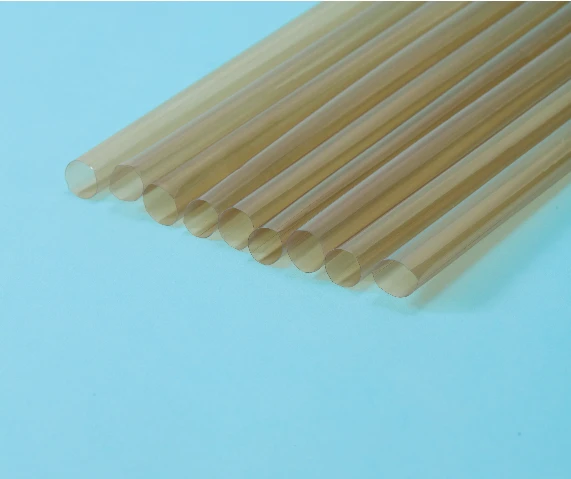
Depending on the device design, ptfe can be manufactured into thin-wall tubing, precision micro tubing, multilumen tubing, catheter liners, and custom-shaped components.
This article explains where ptfe tubing is used in minimally invasive medical devices, what problems it helps solve, and why medical device manufacturers choose ptfe for precision tubing applications.
1. Ptfe Tubing Applications in Minimally Invasive Medical Devices
1.1 Catheter Systems and Catheter Liners
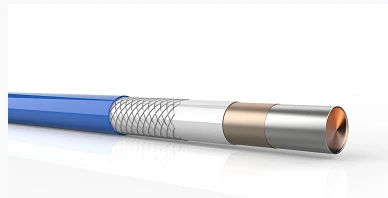
Catheters are among the most common applications for medical-grade ptfe tubing.
Ptfe is frequently used as the inner liner of catheter shafts, including guide catheters, microcatheters, balloon catheters, and other interventional catheter systems.
The smooth internal surface of ptfe reduces friction between the catheter lumen and moving components such as guidewires, balloons, and other delivery instruments.
Problems Ptfe Tubing Helps Solve:
High friction inside catheter channels can increase the force required to advance guidewires and other instruments.
Rough internal surfaces can interfere with smooth device movement.
Thick catheter liners can reduce the available internal working space.
Inconsistent tube dimensions can affect catheter assembly and lumen compatibility.
How Ptfe Helps:
Ptfe catheter liners provide a low-friction internal surface, supporting smoother guidewire tracking and device passage. Thin-wall Ptfe tubing can also help designers maintain a larger internal lumen without significantly increasing the overall catheter diameter.
This is particularly important for microcatheters and other low-profile interventional devices.
1.2 Guidewire Delivery Systems
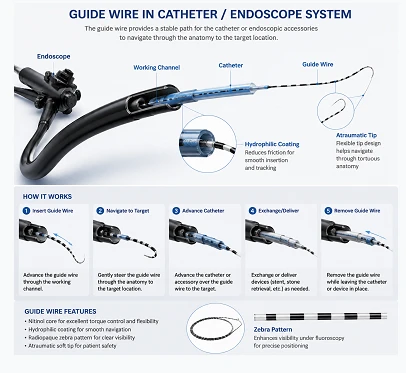
Guidewires are essential components in minimally invasive procedures. They help physicians establish access and guide catheters, stents, and other instruments to the intended location.
Ptfe tubing and Ptfe-based coatings are used in certain guidewire and delivery system designs to provide a smooth, low-friction interface.
Problems Ptfe Helps Solve:
Excessive friction between the guidewire and surrounding components.
Resistance during guidewire advancement and withdrawal.
Surface wear caused by repeated movement.
Difficulty maintaining smooth movement through narrow device channels.
How Ptfe Helps:
The low-friction surface of Ptfe reduces resistance between moving components. This helps improve guidewire tracking and supports smoother interaction between guidewires and catheter systems.
For manufacturers, precision Ptfe tubing can be designed according to the required inner diameter, outer diameter, and wall thickness of the delivery system.
1.3 Endoscopic Devices and ERCP Instruments
Endoscopic devices are designed to enter the body through natural openings or small access points. They often contain narrow working channels for guidewires, cutting wires, irrigation fluids, and other instruments.
Ptfe precision tubing is used in selected endoscopic components, including biliary endoscopy systems, ERCP instruments, and specialized multilumen catheter assemblies.
Problems Ptfe Helps Solve:
Limited space for multiple functional channels.
Friction between internal wires and tubing walls.
Inconsistent fluid flow through narrow channels.
Difficulties maintaining accurate lumen dimensions in complex structures.
How Ptfe Helps:
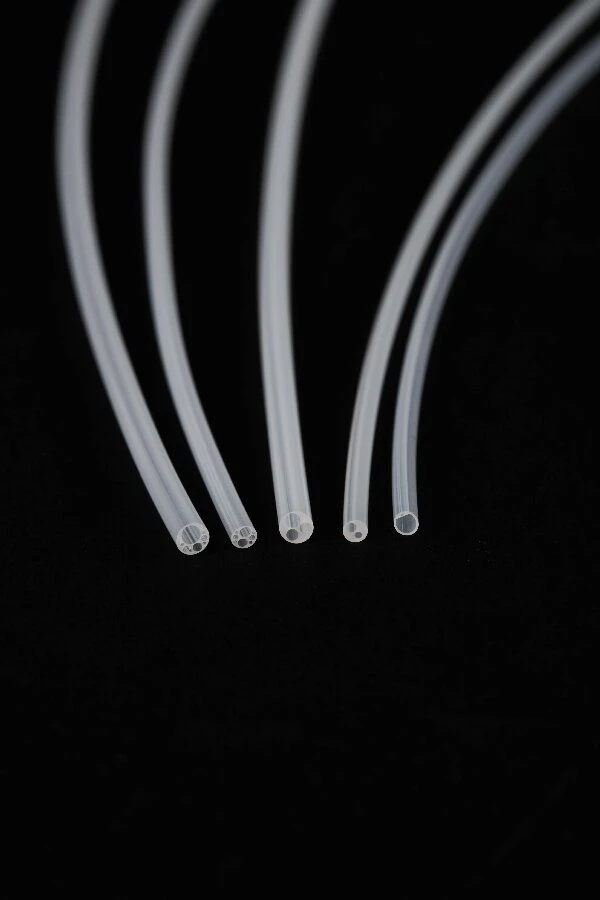
Ptfe tubing can be manufactured into precision micro tubes and custom multilumen structures.
For example, multilumen Ptfe tubing can be designed with separate channels for guidewire passage, fluid injection, and other functional components.
Accurate lumen positioning and consistent wall thickness help support device assembly and functional performance.
For complex endoscopic instruments, manufacturers can specify equal or unequal lumen configurations according to the device design.
1.4 Introducer Sheaths and Vascular Access Devices
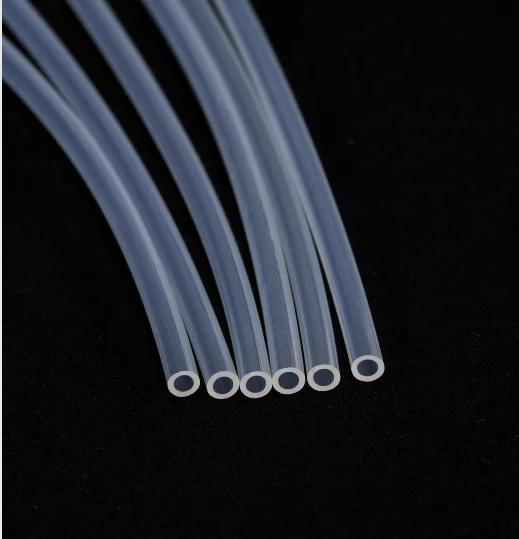
Introducer sheaths provide an access pathway for medical instruments during minimally invasive vascular procedures.
Ptfe can be used as a liner or tubing component in selected sheath and delivery system designs.
Problems Ptfe Helps Solve:
Friction during the insertion and withdrawal of medical instruments.
Resistance between the sheath lumen and inserted devices.
Space limitations in small-profile access systems.
Material stability requirements during manufacturing and sterilization.
How Ptfe Helps:
Ptfe's low-friction surface supports smoother passage of guidewires, catheters, and other instruments.
Its chemical resistance and thermal stability also make it useful in medical device designs that require compatibility with specified cleaning, sterilization, and processing conditions.
1.5 Medical Fluid Transfer and Irrigation Systems
Medical equipment often requires controlled fluid transfer through narrow tubing systems.
Ptfe tubing can be used in selected fluid management applications, including irrigation lines, analytical equipment, and specialized fluid transfer assemblies.
Problems Ptfe Helps Solve:
Chemical interaction between the tubing material and transferred fluids.
Surface adhesion and residue accumulation.
Fluid contamination risks associated with unsuitable material selection.
Performance changes caused by temperature exposure.
How Ptfe Helps:
Ptfe has excellent chemical resistance and a relatively non-adhesive surface. These properties make it suitable for transferring many compatible liquids and chemicals.
Its smooth internal surface also supports consistent fluid passage when the tube diameter, wall thickness, and operating conditions are properly selected.
For medical fluid applications, material compatibility and extractables and leachables requirements should be evaluated according to the intended use.
1.6 Medical Electrical Equipment and Sensor Systems
Not all Ptfe medical tubing applications involve fluid transfer.
Ptfe is also used in electrical insulation components and protective tubing for selected medical instruments, sensor assemblies, and electronic systems.
Problems Ptfe Helps Solve:
Electrical leakage between internal conductors.
Insulation degradation under demanding operating conditions.
Chemical exposure affecting protective components.
Limited space around small electrical assemblies.
How Ptfe Helps:
Ptfe provides excellent dielectric properties and electrical insulation. It can be manufactured into small-diameter tubing and thin-wall protective sleeves for selected medical electrical applications.
This makes Ptfe useful in designs where electrical insulation, dimensional precision, and chemical resistance are important.
2. What Medical Device Problems Can Ptfe Tubing Solve?
The value of Ptfe tubing is not limited to its material properties. Its main advantage is that it helps address specific engineering problems in medical device manufacturing.
Common Medical Device Problem
Ptfe Tubing Solution
High friction inside catheter channels
Low-friction inner surface
Difficulty advancing guidewires
Smooth internal passage
Limited space in small catheter designs
Thin-wall tubing and precision liners
Complex internal channel structures
Custom multilumen tubing
Chemical compatibility requirements
Excellent chemical resistance
Electrical insulation requirements
High dielectric strength
Dimensional inconsistency
Precision extrusion and dimensional inspection
Material degradation during processing
Thermal stability under specified conditions
By selecting the appropriate Ptfe tubing structure and specifications, manufacturers can improve component compatibility, simplify device assembly, and support consistent product performance.
3. Why Choose Ptfe Tubing for Medical Device Manufacturing?
Ptfe offers a combination of material properties that are valuable in minimally invasive medical device engineering.
Low Coefficient of Friction
Ptfe has a very low coefficient of friction compared with many conventional engineering plastics.
This property makes it suitable for catheter liners and internal channels where guidewires, balloons, and other components need to move smoothly.
Thin-Wall and Small-Diameter Design
Medical devices increasingly require smaller external dimensions without sacrificing internal functionality.
Precision Ptfe extrusion supports the production of thin-wall and small-diameter tubing, helping designers balance catheter profile and internal lumen space.
Excellent Chemical Resistance
Ptfe is resistant to many acids, alkalis, solvents, and other chemicals.
This property supports applications involving chemical exposure during manufacturing, cleaning, and fluid transfer, subject to material compatibility testing.
Thermal Stability
Ptfe maintains its properties over a wide temperature range.
Its thermal stability is useful for selected medical device manufacturing and sterilization processes. However, the actual sterilization method, exposure conditions, and complete device construction must be validated.
Electrical Insulation
Ptfe has excellent dielectric strength and electrical insulation properties.
It is suitable for protective tubing and insulation components used in selected medical electronic instruments and sensor assemblies.
Customizable Tube Structures
Ptfe tubing can be produced in different configurations to meet specific device requirements, including:
Thin-wall Ptfe tubing
Medical-grade Ptfecatheter liners
Precision micro Ptfe tubing
Multilumen Ptfe tubing
Ptfe heat shrink tubing
Custom extruded Ptfe profiles
These options allow medical device manufacturers to develop tubing components for different catheter structures, working channels, and assembly requirements.
4. Custom Ptfe Tubing Solutions for Medical Device Manufacturers
Medical device development often involves different tubing dimensions, internal structures, and mechanical requirements.
Standard tubing specifications may not meet the requirements of specialized catheter and minimally invasive instrument designs.
Custom Ptfe tubing manufacturing can address these requirements through material selection, precision extrusion, and dimensional control.
Important customization parameters include:
1. Inner Diameter (ID) and Outer Diameter (OD)
Tube dimensions must match the available assembly space and required internal working channel.
2. Wall Thickness
Thin-wall designs help maximize internal lumen space while maintaining the required structural performance.
3. Lumen Configuration
Multilumen Ptfe tubing can be customized with different numbers, sizes, and arrangements of internal channels.
4. Dimensional Tolerance
Accurate dimensional control helps maintain compatibility with other catheter components and supports consistent assembly.
5. Tube Length and Cutting Requirements
Custom lengths and precision cutting can be specified according to production and assembly requirements.
6. Material and Quality Requirements
Medical device manufacturers should evaluate resin specifications, biocompatibility requirements, cleanliness, traceability, and applicable quality standards according to the intended device application.
5. Ptfe Tubing Manufacturing Process for Medical Applications
Consistent manufacturing quality is important for medical-grade Ptfetubing, particularly for thin-wall, micro-diameter, and multilumen products.
A typical Ptfe tubing production process includes:
Raw Material Selection: Select suitable Ptfe resin according to the required material properties and intended application.
Material Preparation: Prepare and condition the material according to the selected processing method.
Precision Extrusion: Form the tube according to the required inner diameter, outer diameter, wall thickness, and structural design.
Sintering and Heat Treatment: Apply controlled thermal processing to develop the required material structure.
Precision Cutting: Cut tubing to specified lengths and dimensional requirements.
Dimensional Inspection: Check inner diameter, outer diameter, wall thickness, length, and other critical dimensions.
Appearance and Quality Inspection: Inspect surface condition, structural consistency, and product cleanliness.
Packaging: Package products according to the agreed cleanliness, handling, and customer requirements.
For medical device applications, manufacturing controls should be supported by appropriate documentation, traceability, and quality management procedures.
6. How to Select the Right Ptfe Tubing for Minimally Invasive Medical Devices
Choosing the right Ptfe tube requires more than checking its diameter.
Medical device engineers and purchasing teams should consider the following factors:
Device Type: Catheter, microcatheter, endoscope, introducer sheath, or fluid transfer system.
Tube Dimensions: Required ID, OD, wall thickness, and dimensional tolerances.
Internal Structure: Single-lumen, multilumen, or customized profile.
Mechanical Requirements: Flexibility, tensile strength, pushability, and dimensional stability.
Operating Environment: Chemical exposure, temperature, pressure, and sterilization conditions.
Biocompatibility: Applicable testing and regulatory requirements based on the device's intended use and patient-contact classification.
Manufacturing Compatibility: Compatibility with bonding, etching, reflow, assembly, and other downstream processes.
Providing a technical drawing, sample, or detailed specification is an effective way to evaluate a custom Ptfe tubing solution.
7. Conclusion: PtfeTubing Supports the Development of Advanced Medical Devices
As minimally invasive medical technologies continue to advance, medical device manufacturers need tubing materials that support smaller profiles, smoother internal movement, precise fluid channels, and reliable material performance.
Ptfe tubing provides a combination of low friction, chemical resistance, thermal stability, electrical insulation, and customizable dimensions.
From catheter liners and guidewire delivery systems to endoscopic instruments, introducer sheaths, and specialized multilumen components, Ptfe tubing plays an important role in many medical device designs.
For manufacturers developing next-generation minimally invasive instruments, selecting the right Ptfe tubing structure, dimensions, and material specifications is an important step toward achieving reliable device performance.
Looking for Custom Ptfe Tubing for Medical Devices?
We provide customized Ptfe tubing solutions for medical device manufacturers, including thin-wall tubing, precision micro tubing, multilumen tubing, and catheter liner applications.
Send us your drawings, samples, or technical specifications to discuss suitable tubing dimensions, structures, and manufacturing requirements.