

Buying PTFE Tubing: What Every Industrial Buyer Should Know Before Choosing a Manufacturer
By Zetai | Hubei Zetai New Material Co., Ltd.
Category: PTFE Tubing Purchasing Guide · Industrial Materials · Supplier Selection
Recommended SEO keyword: PTFE Tubing Manufacturer
Introduction: Buying PTFE Tubing Is More Than Comparing Prices
When purchasing PTFE tubing, many buyers begin with a relatively simple question: How much does it cost per meter?
It is a reasonable place to start, particularly when comparing several suppliers or preparing a budget for a new project. However, after years of working with fluoropolymer tubing and customers from different industries, we have found that the lowest quotation does not always represent the best purchasing decision.
A PTFE tube may look almost identical to another one. Both may be white, have the same nominal outside diameter, and be described as virgin PTFE tubing. Yet their dimensional consistency, wall thickness, surface condition, flexibility, manufacturing quality and suitability for a particular application may be quite different.
These differences become important after the tubing is installed. A dimensional deviation can create problems during assembly. An unsuitable wall thickness may affect pressure performance. Inconsistent production can make automated equipment difficult to operate. In more demanding applications, a material that has not been properly evaluated may create unnecessary maintenance or replacement costs.
For purchasing managers, engineers and equipment manufacturers, selecting PTFE tubing is therefore not simply a matter of finding a product with the right name. It involves understanding the application, defining the technical requirements, evaluating the manufacturer and confirming that the supplier can maintain consistent quality over repeated orders.
At Zetai, we believe that a good purchasing decision begins with the right questions. In this article, we would like to discuss the issues that buyers should consider before placing an order, including product specifications, material selection, manufacturing capability, quality inspection, customization, supplier communication and long-term supply arrangements.
Our aim is not to suggest that one type of PTFE tubing is suitable for every application. Instead, we want to help buyers make more informed decisions and avoid problems that can often be identified before production begins.
1. Start With the Application, Not Just the Product Name
One of the most common problems in international PTFE tubing procurement is that buyers provide only a product name when requesting a quotation.
For example, an inquiry may simply say:
"We need PTFE tubing for industrial equipment."
This information gives a manufacturer a general direction, but it is not enough to determine the correct product.
PTFE tubing is used in a wide variety of applications, including chemical transfer, medical devices, laboratory equipment, semiconductor manufacturing, automotive systems, electrical insulation, coffee machines and pneumatic equipment.
The requirements of these applications can be very different.
A tube used for transferring chemicals may need to withstand particular chemical concentrations and operating temperatures. A medical device manufacturer may require precise dimensions, controlled cleanliness and specific material documentation. A coffee machine manufacturer may focus more on food-contact requirements, hot-water conditions and reliable connections.
Even within the same industry, different equipment designs can require different tubing specifications.
Before contacting a supplier, buyers should consider several basic questions:
What liquid, gas or other medium will pass through the tube?
What are the normal and maximum operating temperatures?
Is the system operating under pressure, vacuum or both?
What are the required inside and outside diameters?
Does the installation require a straight, flexible or corrugated tube?
Will the tube remain stationary or experience repeated movement?
Does the application require special cleanliness or regulatory documentation?
How will the tube connect to the equipment?
These questions help turn a general product inquiry into a practical technical specification.
From our experience, customers who provide more complete application information usually receive more useful quotations. It also reduces the possibility of selecting a product that technically belongs to the PTFE tubing category but does not meet the actual requirements of the equipment.
2. Why Dimensions Matter More Than Many Buyers Expect
Dimensional accuracy is one of the first things that experienced buyers examine when purchasing PTFE tubing.
At first glance, inside diameter (ID), outside diameter (OD) and wall thickness may appear to be straightforward measurements. However, these three dimensions directly influence installation, flow conditions, mechanical performance and compatibility with fittings.
For example, consider a tube specified as 4 mm OD × 2 mm ID.
The nominal wall thickness is calculated as:
Wall Thickness = (OD − ID) / 2
In this example, the nominal wall thickness is 1 mm.
However, simply confirming the nominal dimensions does not answer every technical question. Buyers should also understand the dimensional tolerances and how they are inspected.
Inside Diameter: An Important Factor in Flow and Connection Design
The inside diameter determines the available passage for the transported medium.
In systems where flow rate and equipment response are important, an incorrect ID may influence the performance of the entire assembly.
For example, a tube with a smaller-than-required internal passage may create additional flow resistance. In precision equipment, even relatively small dimensional differences can make installation or connection difficult.
Buyers should therefore confirm whether the specified ID is a nominal value or whether a particular tolerance is required.
Outside Diameter: Compatibility With Equipment and Fittings
The outside diameter is particularly important when the tube must fit into connectors, compression fittings, push-in fittings or specially designed equipment components.
A tube that is slightly larger or smaller than expected may not provide the intended connection.
This is why manufacturers should not only confirm the nominal OD but also understand the required dimensional tolerance.
Wall Thickness: Affects More Than Appearance
Wall thickness influences the tube's mechanical behavior and pressure capability.
Two tubes with the same outside diameter can have different inside diameters and wall thicknesses. Their performance should not be assumed to be identical.
For pressure-related applications, the buyer needs to evaluate the actual tube construction together with working temperature, operating pressure, fittings and installation conditions.
At Zetai, we encourage customers to provide drawings or physical samples whenever dimensional requirements are particularly strict. This makes it easier to establish a clear production reference and avoid misunderstandings between the purchasing and manufacturing teams.
3. Virgin PTFE or Modified PTFE: Which Should You Choose?
Another question frequently raised during procurement is whether to purchase virgin PTFE tubing or modified PTFE tubing.
Virgin PTFE is widely used because of its chemical resistance, low friction characteristics, electrical insulation properties and broad temperature capability.
It is suitable for many general industrial applications, laboratory systems and fluid-transfer environments.
However, buyers should understand that virgin PTFE is not automatically the best option for every mechanical requirement.
Depending on the application, modified PTFE materials may offer different mechanical characteristics.
For example, certain modified formulations are developed to improve particular properties such as deformation resistance, wear behavior or dimensional stability.
The correct choice depends on what the tube is expected to do.
When comparing materials, buyers should pay attention to the following points:
Chemical compatibility
The transported chemical, its concentration, temperature and exposure conditions should all be considered. PTFE has exceptionally broad chemical resistance, but this does not mean every finished tube assembly is suitable for every chemical environment.
Mechanical requirements
If the tubing experiences repeated bending, compression, abrasion or external loading, its mechanical behavior needs to be evaluated.
Dimensional stability
Some applications require consistent dimensions during installation and operation. The material grade and manufacturing process can influence the final result.
Electrical performance
For electrical insulation applications, buyers should identify the required electrical properties rather than relying only on the general description of PTFE.
We recommend discussing the intended operating conditions with the manufacturer before selecting a material grade. A product specification should be based on the requirements of the finished application, not simply on the name of the raw material.
4. PTFE, FEP and PFA: Why the Cheapest Material Is Not Always the Best Choice
Buyers who work with fluoropolymer products often compare PTFE, FEP and PFA tubing.
These materials share some important characteristics, but they are not interchangeable in every application.
PTFE Tubing
PTFE is well known for its broad chemical resistance, low friction coefficient, excellent electrical insulation and high-temperature capability.
It is commonly selected for chemical transfer, industrial machinery, laboratory equipment and applications where demanding chemical or thermal conditions are involved.
One consideration is that conventional PTFE tubing is generally opaque or translucent to varying degrees rather than fully transparent, which may matter when visual monitoring is required.
FEP Tubing
FEP tubing is often selected when transparency and visual inspection are important.
It can be useful in fluid-transfer systems where operators need to observe the movement or condition of the medium.
Its thermal performance and mechanical characteristics differ from those of PTFE, so the application temperature and pressure conditions must be checked carefully.
PFA Tubing
PFA tubing combines broad chemical resistance with melt-processability and is frequently used in demanding chemical handling and high-purity fluid systems.
It is often considered when a project requires a combination of chemical performance, transparency and particular processing characteristics.
|
Comparison |
PTFE |
FEP |
PFA |
|---|---|---|---|
|
Chemical resistance |
Excellent |
Excellent |
Excellent |
|
High-temperature capability |
Generally highest of the three |
Lower than PTFE |
High |
|
Transparency |
Generally opaque |
Transparent |
Transparent |
|
Melt-processable |
No, conventional PTFE |
Yes |
Yes |
|
Typical applications |
Industrial and chemical systems |
Fluid observation and transfer |
High-purity chemical systems |
The table provides a general comparison, not an approval for a specific application. Actual performance depends on the selected grade, tube construction, dimensions and operating conditions.
From a purchasing perspective, the important question is not which material is universally superior. It is which material provides the necessary performance without introducing unnecessary cost.
If the application does not require the special characteristics of PFA or FEP, PTFE may be an appropriate and economical choice. On the other hand, choosing PTFE simply because it is cheaper can be a poor decision when transparency or other specific requirements are essential.
5. Temperature and Pressure: Two Specifications That Must Be Evaluated Together
Temperature resistance is one of the main reasons buyers choose PTFE tubing.
However, one mistake we often see in product inquiries is treating the maximum temperature listed in a material specification as the temperature at which the tube can always operate under any pressure.
These are not the same thing.
A material may retain useful properties at elevated temperatures, but the mechanical performance of a finished tube can change with temperature.
Pressure capability is influenced by several factors, including:
Inside diameter and outside diameter.
Wall thickness.
Material grade.
Operating temperature.
Continuous or intermittent pressure.
Pressure fluctuations and sudden surges.
Fitting design and installation conditions.
For example, a tube used in a hot-water system may experience different mechanical conditions from a similar tube operating at room temperature.
Likewise, a tube exposed to repeated pressure cycles may require a different evaluation from one operating under stable conditions.
Buyers should distinguish between normal working pressure, maximum operating pressure and burst pressure.
These values describe different aspects of performance and should not be used interchangeably.
A burst-pressure result obtained under controlled test conditions does not automatically establish a safe continuous working pressure for every installation.
When requesting a quotation, we recommend providing the actual operating temperature and pressure range together. This allows the manufacturer to evaluate the product as a complete specification rather than relying on an isolated material property.
For safety-critical systems, the final selection should be supported by appropriate engineering calculations and application-specific testing.
6. Why PTFE Tubing Prices Can Differ So Much Between Manufacturers
Price is naturally an important consideration in international purchasing.
When buyers receive quotations from several manufacturers, they may notice that the prices for seemingly similar PTFE tubing can vary considerably.
There are several possible reasons.
Raw Material Selection
The raw material is one of the factors influencing the final product cost.
Different resin grades, material sources and formulation requirements may result in different manufacturing costs.
Buyers should clarify whether the quotation refers to virgin PTFE or another material formulation.
Product Dimensions
Wall thickness, outside diameter, inside diameter and overall length all influence material consumption and production requirements.
A small dimensional change may have a noticeable effect on the final cost, especially for products manufactured in large quantities.
Manufacturing Process
Different types of PTFE tubing require different production processes.
Straight tubing, thin-wall tubing, capillary tubing and corrugated tubing do not necessarily involve identical equipment, processing conditions or inspection procedures.
Custom specifications may also require additional production preparation.
Quality Requirements
A product requiring tighter dimensional tolerances or more detailed inspection may involve additional manufacturing and quality-control work.
Likewise, special packaging, cleanliness requirements and documentation can influence the quotation.
Order Quantity
Large-volume orders may benefit from more efficient production arrangements.
However, the relationship between quantity and price is not always linear. A small custom order may require particular tooling, setup or inspection arrangements.
For buyers, it is important to compare quotations on the same technical basis.
A lower price is meaningful only when the products being compared have equivalent specifications and acceptable quality.
We believe that a transparent quotation should clearly identify the material, dimensions, tolerance, quantity, packaging and any special requirements included in the price.
7. How to Evaluate the Quality of a PTFE Tubing Manufacturer
Choosing the right manufacturer is often more important than choosing the cheapest product.
A supplier may offer an attractive quotation, but buyers still need to understand whether the company has the manufacturing capability to deliver the same specifications consistently.
Here are several areas worth examining.
Manufacturing Experience
Experience does not guarantee that every product will be perfect, but it can indicate whether a manufacturer has encountered different application requirements and production challenges.
Ask how long the company has worked with PTFE and other fluoropolymers.
More importantly, ask whether it has experience manufacturing the particular type of tube required for your project.
A company specializing in general industrial tubing may not have the same production experience as one manufacturing precision medical tubing.
Production Facilities
Manufacturing capability should be supported by actual production facilities.
Buyers may want to understand:
What production equipment is available?
Can the factory manufacture small-diameter tubing?
Does it support thin-wall or special-dimension products?
Can it handle customized orders?
What is the approximate production capacity?
Does it have dedicated inspection equipment?
These questions help buyers determine whether a supplier is a genuine manufacturer with relevant production resources or primarily a trading company.
Quality Management
A reliable manufacturer should have a defined approach to quality management.
This may include raw material verification, production monitoring, dimensional inspection, finished-product testing and records management.
The exact inspection requirements depend on the product and customer specification.
For example, a buyer purchasing standard industrial PTFE tubing may require dimensional checks and visual inspection, while a customer manufacturing medical equipment may need additional documentation and cleanliness controls.
Certifications and Supporting Documents
Certifications can provide useful information about a company's management systems and production controls.
However, buyers should understand what each certificate actually covers.
For example, ISO 13485 relates to quality management systems for medical devices. It does not automatically mean that every product manufactured by a certified company is approved for every medical application.
Similarly, FDA-related requirements should be evaluated according to the applicable material, product and intended use.
A professional supplier should be able to explain the relevant documentation and its scope.
8. Why Samples Should Be Tested Before Large Orders
For many purchasing projects, a sample order is one of the most practical ways to reduce risk.
A product description and technical data sheet can provide useful information, but they cannot answer every question about how the tubing will perform in the customer's actual equipment.
We encourage buyers to conduct sample evaluations before committing to substantial production quantities, particularly when the project involves custom dimensions or new equipment.
A reasonable sample evaluation may include several steps.
First, check the physical dimensions.
Measure the ID, OD and wall thickness using suitable measuring equipment.
If dimensional tolerances are important, agree on the measurement method and inspection locations in advance.
Second, inspect the surface condition.
Look for visible scratches, contamination, deformation, inconsistent appearance or other defects that could affect the application.
Third, test installation compatibility.
Install the sample using the actual connectors or fittings where possible.
This can reveal problems that are difficult to identify from a drawing alone.
Fourth, evaluate application performance.
Where appropriate, conduct pressure, leakage, chemical compatibility or temperature testing according to the equipment requirements and approved test procedures.
Finally, document the results.
If the sample passes evaluation, keep an approved sample or drawing as the reference for future production.
This is particularly important for repeat orders.
A clear sample approval process helps both the buyer and manufacturer understand what constitutes an acceptable finished product.
9. Custom PTFE Tubing: What Information Should Buyers Provide?
Not every application can use a standard catalogue product.
In many industries, equipment manufacturers require special dimensions, particular flexibility, unusual cross-sections or customized product structures.
Custom PTFE tubing can be developed around these requirements, but successful customization depends heavily on communication.
When requesting a customized product, buyers should provide as much of the following information as possible:
|
Information |
What the manufacturer needs |
|---|---|
|
Product material |
PTFE, modified PTFE or another fluoropolymer |
|
Inside diameter |
Required ID and tolerance |
|
Outside diameter |
Required OD and tolerance |
|
Wall thickness |
Nominal value or specified range |
|
Tube length |
Coil length or individual cut length |
|
Color |
White, natural or specified color |
|
Structure |
Smooth, corrugated, multi-lumen or other design |
|
Application |
Intended equipment and operating conditions |
|
Quantity |
Sample, trial order or mass production |
|
Drawing |
Technical drawing or physical reference sample |
For complex designs, a drawing is usually more useful than a written description alone.
It is also important to identify which dimensions are critical and which can accept normal manufacturing tolerances.
This distinction helps the manufacturer focus on the requirements that actually affect product performance.
At Zetai, customization is an important part of our product offering. Our product range covers industrial and medical-grade fluoropolymer tubing, including PTFE tubing, capillary tubes, corrugated tubing, heat-shrink tubing and specialized medical tubing.
We support OEM requirements for both small-batch trials and larger-volume production, subject to product specifications and manufacturing evaluation.
10. What Buyers Should Know About PTFE Tubing for Different Industries
Although PTFE is used across many industries, the purchasing priorities are not identical.
Understanding these differences helps buyers communicate their requirements more accurately.
Chemical Processing
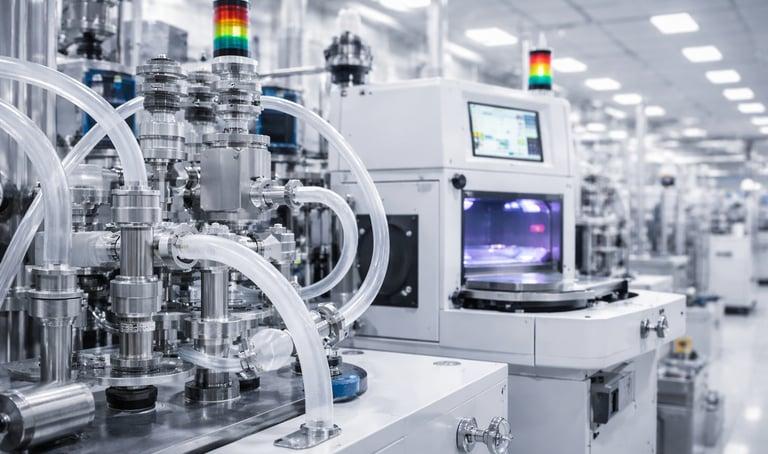
Chemical processing customers often prioritize chemical compatibility, temperature performance, pressure conditions and resistance to long-term exposure.
The chemical itself must be identified, including its concentration and operating temperature.
It is also worth considering cleaning chemicals and flushing fluids, which may be different from the main process medium.
Medical Devices

Medical device manufacturers may require precise dimensions, controlled material selection, cleanliness and documented manufacturing processes.
For products intended for medical use, buyers should define the intended application and the relevant regulatory or biocompatibility requirements.
A general industrial-grade PTFE tube should not automatically be considered suitable for medical use simply because the base polymer is PTFE.
Semiconductor Manufacturing
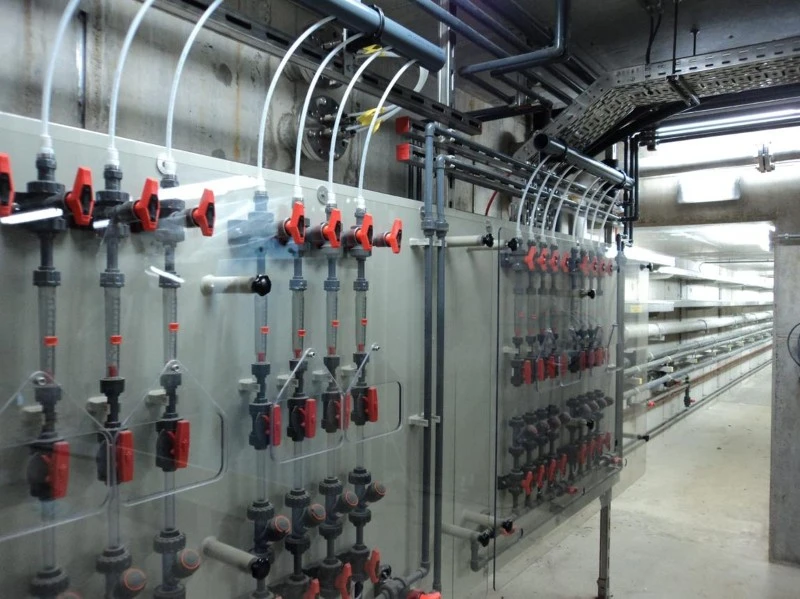
Semiconductor manufacturing places particular attention on contamination control and chemical delivery reliability.
Depending on the process, buyers may require specific material grades, cleanliness controls and documentation.
The phrase "semiconductor grade" should not be treated as a complete specification. Customers should define the actual purity, chemical and process requirements for the intended line.
Automotive and Electrical Applications
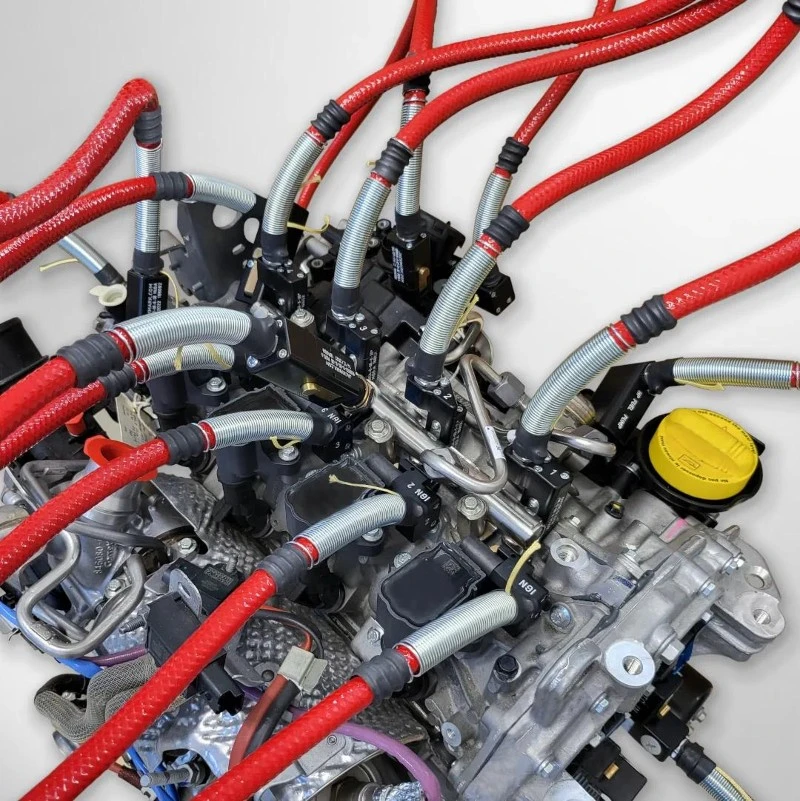
Automotive and electrical applications may focus on insulation performance, temperature exposure, dimensional stability and resistance to environmental conditions.
In these cases, the required electrical or mechanical performance should be identified clearly.
Food and Beverage Equipment
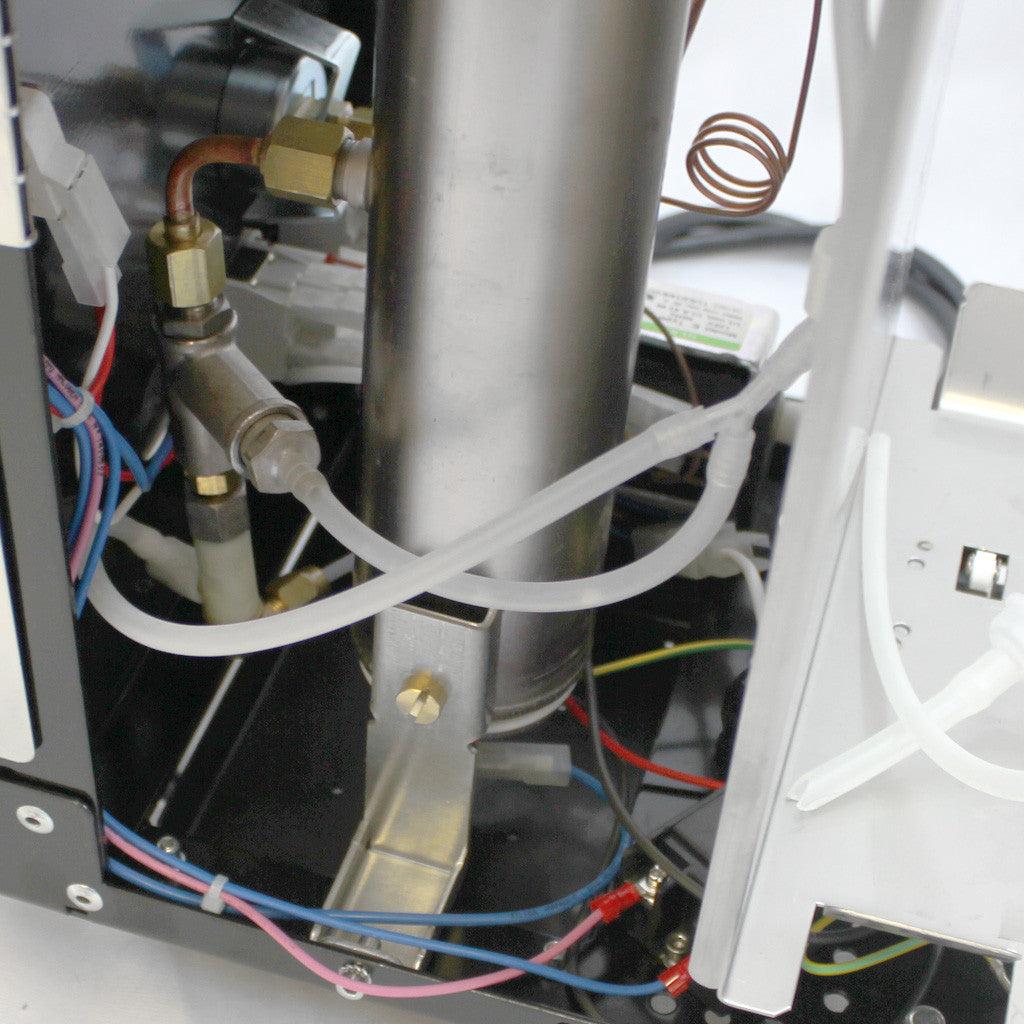
Food and beverage equipment manufacturers may use PTFE tubing for hot-water transfer and other fluid-handling functions.
The buyer should confirm the relevant food-contact requirements, operating temperature, pressure and connection design.
The material and finished product should be assessed against the requirements applicable to the intended market and application.
11. How to Avoid Common Problems During International Procurement
International purchasing involves more than product quality.
Communication, documentation, shipping and order management can all influence the final result.
Based on our experience communicating with overseas customers, several common issues deserve attention.
Avoid Incomplete Product Descriptions
A request that only states "PTFE tube, 6 mm" leaves several questions unanswered.
Does 6 mm refer to the ID or OD? What is the required wall thickness? Is the tube rigid or flexible? What tolerance is acceptable?
A complete specification helps prevent incorrect quotations and unnecessary revisions.
Confirm Units of Measurement
Some buyers use millimeters, while others use inches.
Confusion can occur when dimensions are converted or when drawings contain mixed measurement systems.
Always confirm the final production unit and drawing revision before approving an order.
Agree on Packaging Requirements
PTFE tubing may be supplied in coils, straight lengths or individually cut pieces.
Packaging should protect the product from deformation, contamination and unnecessary handling damage.
For cleanroom-related or medical applications, packaging requirements may be more specific.
Confirm Lead Time Before Placing the Order
Production lead time can depend on raw material availability, product complexity, order quantity and manufacturing schedules.
For custom products, buyers should confirm whether the quoted lead time includes sample approval and any additional inspection.
Keep Technical and Commercial Communication Clear
Technical approval and commercial approval are two separate steps.
Before production begins, both sides should confirm the final specifications, price, quantity, delivery terms and documentation requirements.
A written confirmation is especially valuable for repeat orders.
12. What Makes a Reliable Long-Term PTFE Tubing Supplier?
Many purchasing managers are not looking for a supplier who can deliver only one successful order.
They want a manufacturing partner who can support future projects, maintain product consistency and communicate effectively when requirements change.
This is particularly important for equipment manufacturers whose production depends on a stable supply of specific tubing dimensions.
When evaluating a long-term supplier, buyers should consider more than the initial quotation.
Production consistency
Can the manufacturer reproduce the approved product specifications across different batches?
Technical communication
Can its team understand drawings, discuss material requirements and identify potential production difficulties?
Customization capability
Can it support future product modifications and new development projects?
Quality documentation
Can the supplier provide the agreed inspection records and relevant product documents?
Supply capability
Can the company reasonably support the buyer's expected order quantity and delivery schedule?
Problem-solving attitude
When a product does not meet the agreed specification, is the supplier willing to investigate the cause and communicate a practical solution?
In our view, these factors are important indicators of whether a business relationship can develop into a stable long-term partnership.
13. Why Work With Zetai for PTFE Tubing?
At Hubei Zetai New Material Co., Ltd., we focus on the development and manufacturing of industrial and medical-grade fluoropolymer tubing and PTFE finished products.
Zetai was established in 2021, while our team's experience in PTFE, FEP and PFA tubing manufacturing extends over 15 years.
Our production facilities are located in Hanchuan, Hubei, China.
We understand that overseas customers need more than a catalogue and a price list. They need a manufacturer who can understand their requirements, provide suitable product options and maintain communication throughout the purchasing process.
Our capabilities include several areas.
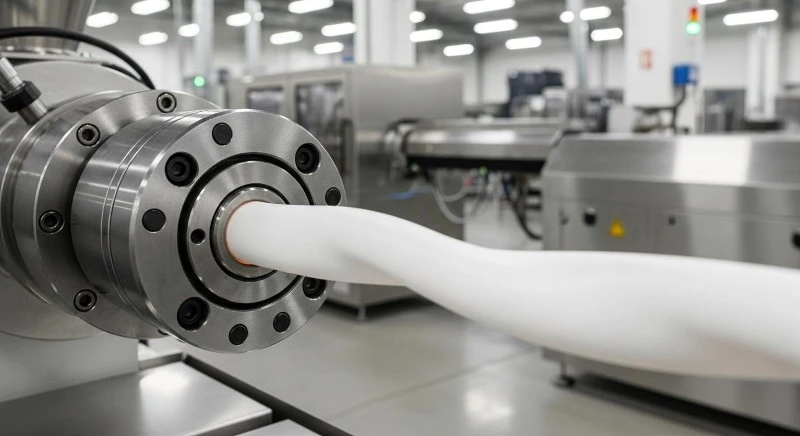
A Broad Range of Fluoropolymer Products
Our product range includes:
Standard PTFE tubing.
PTFE capillary tubing.
PTFE corrugated tubing.
Stainless steel braided PTFE hose.
PTFE heat-shrink tubing.
FEP tubing.
PFA tubing.
Medical PTFE tubing.
PTFE multi-lumen tubing.
Customized fluoropolymer products.
This range allows customers to discuss different tubing requirements with one manufacturing partner.
Manufacturing Facilities and Production Resources
Our facilities include more than 10,000 square meters of modern workshops, approximately 2,000 square meters of cleanroom space and advanced testing equipment.
These resources support our manufacturing activities across different fluoropolymer product categories.
We recognize that production capability is not simply about factory size. Equipment suitability, process management and quality inspection all matter when producing tubing with specific dimensions and performance requirements.
Quality Management and Certifications
Our website lists the following management system certifications:
IATF 16949.
ISO 13485.
ISO 14001.
ISO 45001.
Our products are developed for different industrial and medical applications, with applicable compliance and supporting documentation depending on the product and intended use.
We encourage customers to communicate their certification and documentation requirements during the inquiry stage so that the relevant product scope can be confirmed.
OEM and Customized Manufacturing
We support customized manufacturing for different customer requirements, from small-batch product trials to larger production orders.
Whether a customer needs a particular ID, OD, wall thickness, coil length or specialized tubing construction, our team can review the requirements and discuss manufacturing feasibility.
We believe customization should begin with a clear understanding of the customer's equipment and operating conditions.
A Customer-Oriented Approach
For us, a successful order is not simply a shipment that leaves the factory.
It is a product that meets the agreed requirements and can be used effectively in the customer's application.
We value clear communication, practical technical discussions and long-term cooperation with international customers.
14. A Practical Checklist Before Sending Your PTFE Tubing Inquiry
Before contacting a manufacturer, buyers can use the following checklist to make sure that the most important information is ready.
PTFE Tubing Purchasing Checklist
Confirm the application and industry.
Identify the transported liquid, gas or chemical.
Confirm the required material: PTFE, FEP or PFA.
Specify inside diameter (ID).
Specify outside diameter (OD).
Confirm wall thickness and tolerances.
Define the operating temperature range.
Define working pressure and vacuum conditions.
Confirm the required tube length and packaging.
Provide a technical drawing or reference sample if available.
Identify special cleanliness or certification requirements.
Confirm the sample approval process.
Confirm the order quantity and expected delivery schedule.
If some information is not yet available, that does not mean the purchasing process cannot begin.
A good manufacturer should be able to discuss the missing technical details and help the buyer establish a workable specification.
The important point is to identify which requirements are essential before production starts.
15. Final Thoughts: The Right PTFE Tubing Supplier Helps Reduce the Total Cost of Ownership
When purchasing PTFE tubing, the initial unit price is only one part of the overall cost.
A product that is inexpensive but inconsistent may create additional inspection work, installation difficulties, production interruptions or premature replacement.
On the other hand, a product that is unnecessarily expensive may increase purchasing costs without providing any meaningful benefit to the application.
The best purchasing decision is usually the one that balances technical suitability, consistent quality, reasonable pricing and reliable supply.
We encourage buyers to look beyond product photographs and general descriptions. Ask manufacturers about material selection, dimensional tolerances, inspection methods, sample approval and production capability.
If a supplier can explain these points clearly and support its claims with appropriate information, it becomes much easier to assess whether the company is suitable for your project.
At Zetai, we believe that every successful cooperation starts with understanding the customer's actual requirements.
Whether you are purchasing standard industrial PTFE tubing, developing a customized fluoropolymer tube or looking for a long-term manufacturing partner, our team is willing to discuss your project and explore suitable solutions.
Looking for a reliable PTFE tubing manufacturer?
Contact Hubei Zetai New Material Co., Ltd. with your product drawings, dimensions, application details or existing samples. Our team will review your requirements and help you identify a suitable tubing solution.
Zetai – Focusing on Fluoropolymer Tubing Manufacturing and Customized Solutions.
Website: https://www.witflonptfetubing.com/
Email: vivian@wentaiptfe.com